SV Orion - Annapolis, MD


  • Home
  • About
  • Contact
  • Galleries
    • Orion
      • Orion Jr
      • Specifications
        • Specifications Overview
          • Specification - Engine
            • Specification - Electrical Power
              • Specifications - Ground Tackle
                • Specifications - Navigation
                • 2012
                • Favorites
                • Past Logs
                  • 2011
                    • 2010
                      • 2009
                        • 2008
                          • 2007
                            • Older Logs>
                              • 2006>
                                • 2006 Getting Ready
                                  • 2006 Chesapeake Bay
                                    • 2006 ICW
                                      • 2006 Early April Gallery
                                        • 2006 Early May Gallery
                                          • 2006 Late July Gallery
                                          • 2005
                                            • 2004
                                          • Distribution List
                                          • Location

                                          Early February - New Routes to a Familiar Destination 02/15/2012
                                          0 Comments
                                           
                                          Picture
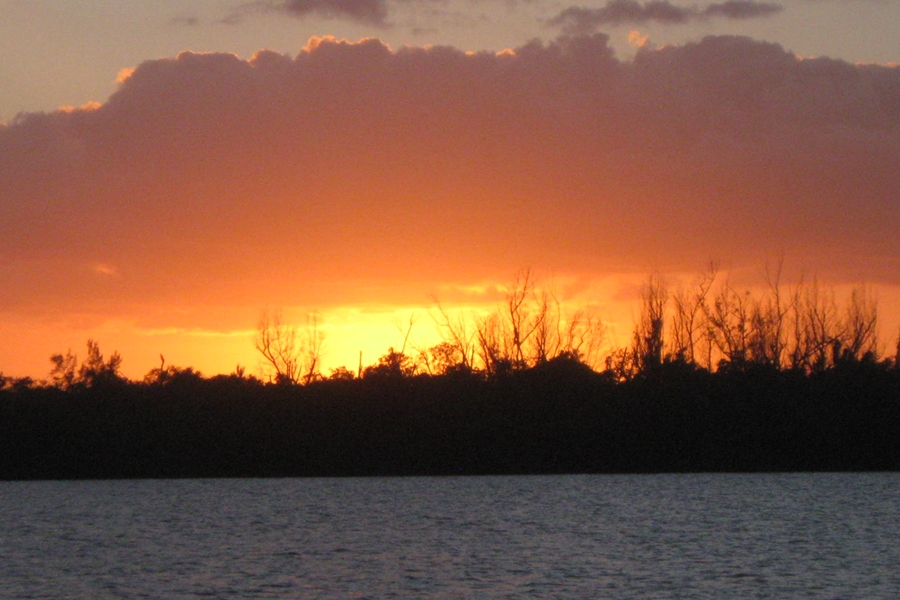
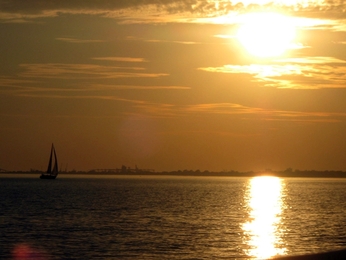
                                          Boot Key Harbor mooring field at sunset
                                          We arrived in Marathon on the first Sunday in February, having taken a much different route to get here.  We left Fort Myers Beach 5 days earlier and worked our way south down the west coast of Florida past the highly-developed areas of Naples and Marco Island to the other extreme of wilderness in the Everglades.  Since our arrival, we’ve taken care of some boat chores and gotten re-acquainted with a community of boaters here in the Keys.


                                          Picture
                                          Approaching Marco Island from Capri Pass
                                          From Fort Myers Beach South

                                          After studying the charts and guidebooks for Florida’s southwest coast, we came up with a plan for traveling to the Florida Keys.  Our first stop was going to be either Naples or Marco Island, a relatively short distance from each other and a reasonable day’s run from Fort Myers Beach.  To ensure enough time on the other end to change our minds, we headed out shortly after sunrise on the 1st of February and made a slow trip around the northern tip of Estero Island before powering up for the run down the coast.  There was little wind this day to help us boost our speed, so the outboard pushed us along in the flat seas. 
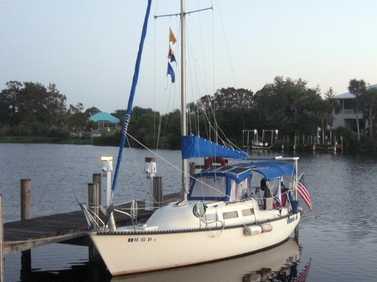
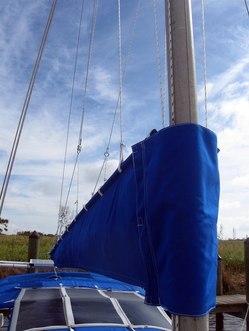
                                          By mid-afternoon, we were heading into Capri Pass, which would take us up to our anchorage in Factory Bay on Marco Island and the last access to fuel and fresh water for the next 5 days.  After confirming our entrance to the anchorage by talking to another cruiser anchored there (there is a shoal in the middle of the bay with 2 entrances on either side), we set the hook and then took advantage of the local marina to top off both sets of tanks and remove trash in preparation for our foray into the Everglades. 


                                          Picture
                                          The Inside route from Marco Island to Coon Key Pass
                                          Another first light departure took us around the northern side of Marco Island on the shallow “inside” route to Coon Key pass that Orion Jr’s shallower draft allowed us to travel.  This cut out several miles of travel around Cape Romano for the next leg of our journey toward Russell Pass off Everglades City.  Within minutes of pulling anchor, we had left the condos and high rises behind and were surrounded by mangroves.  Apparently Marco Island’s intense development sits in isolation surrounded by the wilderness of Rookery Bay State Park.  Other than a few fishing boats, we had this route to ourselves, until we passed the small town of Goodland, and began our transit of Coon Key Pass out to the Gulf.  


                                          Picture
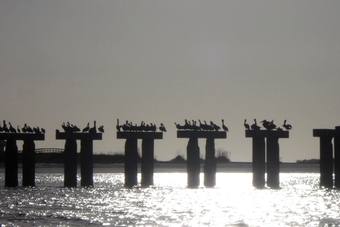
                                          A flock of white pelicans guard the entrance to Indian Key Pass
                                          It was a relatively short day and with little wind, we motored for only a few more hours to reach Indian Key Pass, the entrance to the long channel up to Everglades City, by early afternoon.  The entrance is guarded by a flock of white pelicans that cluster on a sandy island near the entrance.  As we made our way up to Russell Pass, we were guided by a dolphin who kept surfacing next to the cockpit to keep an eye on us.  As we set anchor, we knew the light winds were going to make for a lot of unwelcome guests as the sun set.  This is the Everglades after all, the natural home of mosquitos and no-seeums.  So Cathy rigged up some finer netting over the forward hatch and the companionway, which kept us mostly free of the little critters.  

                                          Picture
                                          Sunrise leaving Russell Pass in the Everglades
                                          The next day’s trip was going to be one of our longest in our trip to the Keys, so we were underway before sun-up to retrace our steps out Indian Key Pass to the gulf.  Once outside, we had a choice to make.  We could travel a straight line to the Little Shark River entrance, which would take us further offshore, as the coastline curved in to the east, but was the shorter route.  Or we could stay closer to shore and inside the Everglades boundaries, avoiding both crab floats and the more significant waves.  With the calm conditions of our early morning departure, we decided to take a chance on the direct route.  The winds were supposed to build over the course of the day, but we were hoping we would be closer to shore by the time they did.  


                                          Picture
                                          Dave relaxes in the Little Shark River
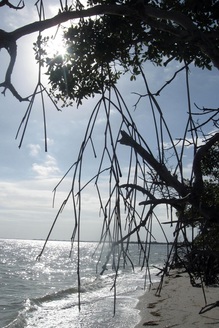
                                          It didn’t take us long to deploy the headsail, which gave us a good boost and brought out ETA into an early afternoon arrival.  We figured that was going to be too good to be true.  And it was.  As the morning hours passed, we found the easterly wind increasing in strength and along with it, the waves.  At our furthest point, we were about 7 miles off shore.  The waves were starting to take a toll on our speed, despite the advantage the wind was giving us.  We changed our course to bring our route closer to shore.  At first, we were just angled in a few degrees to port, but as the waves continued to build, we decided to make a more direct course toward the coast – and calmer seas.  As we made our way closer to shore, the waves lessened somewhat, but the winds were still strong.  Then the crab pots started to appear, requiring more than usual concentration in these rough seas.  They didn’t disappear until we were well inside the park boundary line.  Now, it was just a matter of holding our course until we made the Little Shark Entrance, which we did around 3pm.  It was with some relief that we rounded the first bend in the river to get out of the wind and find shelter.  We had 2 or 3 other boats for company, but there was plenty of room and we could finally relax from a long day’s trip.


                                          Picture
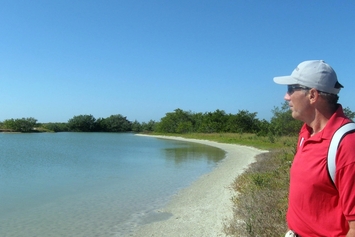
                                          Looking west out the entrance to the Little Shark River
                                          The final leg of the trip to Marathon from the Little Shark River was going to be another long day.  And after being tossed around the day before, we were skeptical about the next day’s travel.  The weather forecast was for more of the same, only a little worse.  However, we decided to get up before dawn the next day and check the weather again before heading out.  To our dismay, the NOAA weather channels that had given us the forecast the night before were silent in the early morning darkness.  With no cell phone service since early the day before, we were not in an easy position to get weather.  So, we tuned into the Waterway Net and asked for the weather forecast for our area.  The Net Control was a little confused, since we should have been able to get that on VHF, but we explained we couldn’t hear anything.  Another ham pulled the forecast and relayed it to us.  As we suspected, the conditions were too rough to risk heading out.  So, it would be a lay day for us and the one other sailboat in the anchorage.  (The two power boats left, since it takes them only a couple of hours to make Marathon.) 

                                          It was a great place to take a breather from the past few days of travel.  We took showers and tidied up the boat, then took time reading and doing some computer work.  (Yes, that means the website.)  We saw a manatee making a leisurely trip up the river and surfacing every few minutes with a snort to catch a breath before the next dive.  And then there were lots of birds.  But once again NO alligators. 

                                          Picture
                                          Approaching the 7-Mile bridge just west of Boot Key Harbor
                                          Having learned our lesson, we pulled the weather at night for the following day.  It was going to be less wind, but overcast and threat of showers and thunderstorms.  We decided to head out despite the threat of rain, and our fellow sailboat, Visitor, joined us for the trip south.  Once we passed Cape Sable and left the protection of the park, we spent most of the day dodging crab pots.  But the wind was giving our speed a big boost.  We were making good time, but not good enough apparently to arrive before the storms came through.  In early afternoon, a weather alert sounded that was warning of high winds and heavy rain in our path.  We stowed everything we could in the cockpit and readied ourselves for the storm.  Luckily we made it through the 7-Mile Bridge spans before the storm hit, and then we just motored into it until it blew over.   

                                          There was a waiting list for mooring balls in Marathon, so we bypassed the main anchorage in Boot Key Harbor and found a spot in Sisters Creek that gave us all around protection and reasonable access to the marina.  We were 23rd on the waiting list the afternoon of our arrival.  By Wednesday, we had secured a mooring ball and settled in for a while at this comfortable port in the Middle Keys.


                                          Picture
                                          Rudder stripped of growth before sanding
                                          Rudderless – for a bit

                                          Orion Jr was already freshly bottom-painted when we bought her, which we knew at the time was a mixed blessing.  No one likes to do bottom painting, so having her already done took that chore off the project list.  However, since she was outfitted as a daysailer, not a cruising boat, we knew the waterline would need to be raised once she was fully loaded.  We just didn’t know how high.  While this was just a nuisance problem on the fiberglass hull, it was a little more worrisome on the wooden rudder.   So, we took advantage of our time on the mooring ball in Marathon to pull the rudder, clean it and re-apply the bottom paint, moving the waterline up a few inches.


                                          Picture
                                          Pulling the rudder is relatively easy.  We (i.e. Dave) just have to lift it up, removing the pins from their sleeves and then remove the tether that keeps it from falling completely off in the event of a problem.  We used the deck washdown and some boat brushes to clean the growth and the little remaining bottom paint from each side of the rudder.  What we found underneath was a bit of a surprise.  There was a coating of epoxy over the wooden base.  Also, in many places there were remnants of some hard bottom paint.  The epoxy showed cracks in places, but was mostly in good condition.  After sanding the rudder and applying epoxy over any cracks we found, we debated whether to apply hard or ablative bottom paint.  The tie breaker was the fact that we planned to pull the rudder off when we stored the boat in the spring.  Hard paint would deteriorate quickly once out of the water, so we went with the ablative paint.  Since we only needed a small amount, we were able to borrow some from a fellow cruiser (one of the perks of being among so many boats here).  In a couple of days the rudder was back on and ready to go.   We were rudderless no more.


                                          Picture

                                          Other Boat Stuff

                                          We’ve had the rainiest February in our six years of cruising, which “helped” us find some leaks that needed attention.  We re-bedded a shroud on the port side (didn’t we do all those?) which was leaking by Cathy’s head in the V-berth and applied silicone to the starboard aft portlight, which was dripping on Dave where he usually sits in the Main Saloon.  At least the leaks were democratic. 

                                          Having used our new Garmin 535 chartplotter to travel the couple of hundred miles from Fort Myers Beach, we felt confident to rely on it, so Dave made the wiring more permanent and removed the 172C, holding it in reserve in case of emergency.    We also began to think about putting Orion for sale, so we created a “pre-sale” website Beneteau Oceanis 36cc Pre-sale to make her more visible on the search engines by the time we officially list her. 


                                          Making the Rounds in Marathon
                                          It didn’t take us long to get back in the swing of things once we pulled into the harbor.  After running around getting fuel, water and groceries, we took a breath to check out the activities in the harbor.  We re-grouped with the other Waterway Net members at the Ham luncheon in the afternoon and attended a Meet n Greet that night, where we got re-acquainted with the couple on Rising Tide, who had accompanied us from Charleston to Southport back in 2009.  (We were both on different boats now, so we didn’t actually put it together until the next day.)  We had fun watching Captain Ron ashore with other boaters, most of whom were live-aboards in the harbor.  Friends we had met in Vero, Mike and Sue on Indecision had arrived ahead of us and we spent time checking in with them.  Stan and Judy were also from Hampton, saw our hailing port and we realized over sundowners that we had many mutual acquaintances in Joy’s Marina back “home”. 

                                          But there was an undercurrent in the harbor, which we got wind of on the Waterway Net shortly before our arrival.  The marina had made some drastic changes in the rates for boats at anchor using their facilities.  These went into effect just days before we came into the harbor.  At $22/day and $85/week to use the facilities, we managed to stay mostly away from the dock until we got a mooring assignment.  However, the full-time residents in the harbor didn’t have this luxury.  It was placing an undue burden on them and those of us waiting to get on a ball.  We decided to join a group attending the next City Council meeting to voice our concerns about the change.  At the same meeting, the discussion was starting around changes to the designated anchoring rules in the harbor.  Dave was among a handful of boaters who spoke to the council to address these issues.  Although nothing concrete was decided on the latter topic, the council agreed to re-consider the rate increases.  Only time will tell what they decide to do on either topic, but the cruisers and locals are still working to effect a reasonable compromise.  

                                          In the meantime, we spend our time with a mix of work and fun, meeting new friends and re-connecting with old ones.

                                          Add Comment
                                           
                                          Late January - Heading West 01/31/2012
                                          0 Comments
                                           
                                          Picture
                                          Late afternoon on Fort Myers Beach
                                           We finally stopped talking about heading west across Florida and actually did it.  After a stop at Vero Beach for repairs and to pick up some mail, we made our way up the St. Lucie River and into the Okeechobee Waterway.  It took us 5 days to cross the state, emerging at Fort Myers on the west coast.  We were now further west than we’ve been before by boat.  After a week at Fort Myers Beach, we made ready to move south along Florida’s west coast.


                                          Picture
                                          Leaving Indiantown in the early morning mist
                                          Okeechobee Waterway

                                          Compared to the busy waters on either end, the Okeechobee Waterway (OWW) is a quiet passageway across the middle of the state.  It connects 3 natural bodies of water – St. Lucie River on the eastern side, Lake Okeechobee in the center, and the Caloosahatchee River on the western side – via 2 manmade canals and the locks necessary to raise boats up approximately 12.5 feet to the lake’s normal level and then back down again.  We had left Vero Beach on a Friday, making it as far south as Jensen Beach (after a stop for lunch at Fort Pierce with Tom and Dau) before daylight was fading.  So, Saturday morning, we were up early to begin our trip west.  The entrance to the waterway is at the intersection of the St. Lucie River and the ICW.  This is a popular outlet to the ocean, which was in evidence on this pleasant Saturday morning.  However, we turned west, away from the activity and made our way upriver toward the first of the locks just past Stuart on the St. Lucie River.  


                                          Picture
                                          Our first day’s destination was Indiantown Marina, only 25 miles away.  It should be a relatively easy travel day.  We just had one opening bridge (Roosevelt Bridge at Stuart) and one lock (St. Lucie Lock) to negotiate in between.  The Roosevelt Bridge is just east of downtown Stuart and is on request, so we didn’t need to time our arrival very carefully.  However, it is positioned on a bend in the river, just west of an older opening RR bridge with a narrow opening and not much room between the 2 bridges.  So, we were grateful that the bridge tender held us up while 2 eastbound boats passed through, so we didn’t have to maneuver past them in the narrow opening

                                          Picture
                                          Tug and barge re-entering St Lucie Lock
                                          The St. Lucie lock is the entrance to the eastern canal on the OWW.  It also has the highest rise, raising us 13 feet from sea level to the current lake level.  The locktender gave us instructions for positioning our fenders and said that the lock had the lines we needed.  However, just before arriving at the lock, we heard a tug call the lock for passage.  We followed up with the lockmaster, who said we would need to wait for the tug to clear the lock before we could enter.  It wasn’t until we arrived at the lock, though that the logistics became clear.  The tug was eastbound and was in the lock when we arrived.  However, what we came to understand was that, upon exiting, he was going to pick up a barge tied to the pilings just outside the lock and then turn around and go back westbound into the canal.  That meant we had to wait for the lock to empty for the eastbound tug, for the tug to pick up the barge and re-enter the lock, for the water to rise for the now-westbound tug, for the water to lower for us, and then we could enter.  With all that water to raise and lower, this lock takes about 30 minutes to pass through.  So, you can do the math.  It took us 1 hour and 45 minutes before we had cleared the lock and were headed further west.  Good thing we had planned a short day!


                                          Picture
                                          Tending lines in St Lucie Lock
                                          Actually navigating the lock was pretty easy.  We just rigged our fenders on the port side, and slowed down to catch lines from the lock tender once in position on the wall.  We had a stiff tailwind that made it a little more interesting, but once we’d grabbed the lines it was just a matter of maintaining some tension as the water rose.  As the doors opened, we were now in fresh water, which would be the case until we exited the final lock on the western side.  We headed out toward Indiantown for a later arrival than planned, but managed to make it in time for a potluck barbecue that was held outside in a beautiful courtyard.  Before leaving, we took a tour of the marina’s boatyard, as we were beginning to look at options for leaving Orion Jr for the spring while we headed back up to Hampton.  This relatively protected marina was one option that we were considering.


                                          Picture
                                          Port Mayaca Lock open to Lake Okeechobee
                                          The next morning we left at first light to head across Lake Okeechobee.  The winds on Sunday were forecast to be the lightest for the next several days, and we wanted benign conditions to cross this large body of water.  (The guidebooks tell you it’s the 2nd freshwater largest lake, behind Lake Michigan, fully inside the US.) We discovered that the lake’s slightly higher than normal level had an advantage.  As we approached the Port Mayaca Lock, which guards the eastern entrance to the lake, the lock tender’s response to our question about fenders seemed odd.  He told us we wouldn’t need them.  We were wondering what he meant, when the lock came into view and our questions were answered.  The lock was open at both ends.  Since the lock only raises and lowers a foot, the higher lake level meant that there was no need to operate the lock.  So, we moved on through, waving hello to the lock tender as we made our way out into the lake.  


                                          We had heard all sorts of stories about wildlife -- alligators, manatees, white pelicans – and a profusion of little fishing boats out on the lake.  For most of our run, we saw little of anything.  A few sailboats passed us heading east.  A couple of trawlers passed us heading west, but until we reached the last mile on the western side, we saw almost no one.  And very little of the more exotic wildlife.  What we did see was water, as far as the eye could see, looking north and west.  On the western edge, we began to see lots of activity at a series of spoil islands, which offered lots of fisherman places to find their favorite catch.  

                                          Picture
                                          Bikers on levee north of Clewiston
                                          On the western side of the lake, the character of the waterway changes.  All along the southern rim, a dike was built back in the 30’s to protect the towns along the lake’s edge from flooding, after devastating loss of life during a major hurricane in the 20’s.  That is why the canal system was built in the first place.  As you re-join the canal at Clewiston, you can see this impressive structure, which now has a bike path, picnic areas and boat ramps along its length.  Also, we were now in the agricultural part of Florida, with crops of sugar cane and citrus and fields with cattle lining the banks of the canal.  The skies frequently were filled with dramatic fires burning in the distance as the sugar cane was being harvested.  


                                          Picture
                                          Sugar cane burning before harvest
                                          We made our way around the rim to Moore Haven, where we turned back to the southwest and re-entered the canal system via another lock.  Moore Haven is a small town that was friendly to boaters with a town dock which we took advantage of.  Dave went looking for a place to buy gas, only to learn it was much too far to walk.  Before he turned around though, someone drove up on a golf cart and offered to take him there.  It turned out he was the mayor’s father.  On the trip, Dave learned that the town had recently lost its grocery store, and the closer of 2 gas stations had closed.  We learned from a local radio station that the town had not had a doctor in residence since the 50’s.  It is very rural and very remote.  On the dock, we met Jack and Diane, a couple of our few fellow travelers on the waterway.  We joined them for cocktails after dinner to share stories about our travels.

                                          The next morning we left a little later, since we needed to wait for the City Hall to open to pay for our dockage.  (The dockmaster didn’t manage to get there the night before.)  We were headed for LaBelle, which was not too far away, but we wanted to make a stop at Glades Boatyard on the way, another potential storage location for Orion Jr.  The winds were up, making us grateful we had crossed the lake the day before.  We got a look at Glades, an inexpensive do-it-yourself boatyard, before moving on to LaBelle.  Just before the LaBelle bridge and just after Port LaBelle Marina, Dave had found a free dock that he thought we could use.  As we approached, a sunbather was enjoying the solitude and fishing there.  We disturbed her tranquility and asked about the availability of the dock, which she said we could use.  We pulled in and chatted for a bit, but we scared her off.  It just wasn’t the same as before. 


                                          Picture
                                          The westernmost lock on the canal - Franklin lock
                                          It was now getting pretty hot during the day, and the calm conditions overnight created some impressive fog in the morning.  We couldn’t clear the La Belle bridge until after 9am anyway, so we took our time getting underway.  We weren’t sure where we were headed for the day.  The Riverview Hotel in LaBelle was full, so we moved on to Franklin Lock, which has 8 slips managed by the Corps of Engineers.  In between were 3 opening bridges (one of which required the bridge tender to walk from shore to the center of the bridge to do the opening) and the Ortona lock.  With only a 3 foot change in water level, the locking was uneventful.  Even with the bridges and locks, we arrived at Franklin Lock by early afternoon.  This turned out to be a great place to stop.  The slips were associated with a campground, and the facilities included showers and laundry for both the boaters and campers.  There were also picnic shelters, grills, and a boat ramp, that we used to pull our dinghy out of the water to clean it.  (It turned out not to need it.)   Although it would have been great to stay another day, the weather for the trip to Fort Myers was going to be better if we didn’t wait.  So, we headed out for the last leg of our cross-Florida trip on Friday morning. 


                                          Picture
                                          Boats rounding Shell Point near Ft Myers
                                          We first had to transit the final lock of the canal, which was another 3 foot drop.  Although we weren’t immediately entering salt water, the water would gradually shift from fresh to saltwater over the next 20 miles as started down the Caloosahatchee River.  We emerged from the tranquil wilderness into the busy Fort Myers waters in late morning.  The contrast was not surprising, but a little wearying.  As the waterway narrowed to round Shell Point, a strictly enforced no wake zone had a dozen or more of us in single file putting along.  What a difference a few hours make.  Our destination for the night was Fort Myers Beach and their town moorings.  We had to cross between the mainland and Sanibel Island, across the inlet to the Gulf to reach it.  The gusty winds from the river actually mellowed out as we passed the open water, so we had an easy transit over to Estero Island, the home of Fort Myers Beach.  We had our choice of mooring balls in the largely open field.  That situation would change over the next few days, but we were glad to be tucked in for a few days, while the winds blew.  And we had one other problem.  We had gone off the edge of our charts.  


                                          Picture
                                          Garmin 535 Chartplotter
                                          “Beyond this place, there be dragons . . .”

                                          The old mapmakers warning about all sorts of calamities befalling those who traveled off the edge of the known world really didn’t apply to us, but we were not going to go far without maps of the west coast of Florida for our chartplotter.  It’s not that Dave hadn’t been working on getting them for quite a while.  Things had just not been going our way.  When we switched to the little boat, we went back to using our Garmin 172C chartplotter.  As far as we were concerned, it was “old faithful”, having taken us thousands of miles before we upgraded Orion back in 2009.  But the older chartplotters require you to unlock regions to get maps for new cruising grounds.  Although Dave had purchased an unlock code a couple of years back, he found that he couldn’t use it when he went to unlock the west coast of Florida.  After several discussions with Cathy and with Garmin, we developed a plan. 

                                          We would buy a refurbished Garmin 535 chartplotter, which came with the inland US charts.  These would allow us to travel much of the Great Loop and other potential future destinations.  We would then use a credit Garmin was giving us to partially offset the cost of the coast US charts, which would give us the west coast of Florida.  Since all of this came together shortly after leaving Palm Coast, we had to find a place to send the chartplotter and chip.  That place turned out to be Fort Pierce and our friends Tom and Dau.  Since the weather for crossing Lake Okeechobee arrived before the chartplotter and chip, we had to rent a car once we made it across Florida and travel back to pick them up.  In a marathon trip across the terrain we had just painstakingly traveled by boat, we drove over and back in a day with the prized possessions in hand. 

                                          Dave quickly installed the new chartplotter and had it operational.  The bigger task was to start planning routes for our travels on the west coast. We spent all of one day just planning the route from Fort Myers Beach to Marathon.  This wasn’t just about creating the waypoints, it was researching where to go, which anchorages are options, which alternate routes should we allow for.  Also, Dave had to switch from the more familiar Mapsource software to Homeport, Garmin’s new route-planning solution for the PC.  But we managed to work through the changes and are now getting re-accustomed to the new chartplotter, whose user interface is very similar to the one we left behind on Orion.


                                          Picture
                                          Fort Myers Beach

                                          1116 Cathy as pirate on Ft Myers Beach

                                          OK, let’s face it.  Fort Myers Beach is a tourist town.  It has miles of beautiful beaches and the associated stores selling everything from ice cream to sunglasses.  Needless to say this attracts lots of people.  As we made our way around discovering this beach town, we found much to recommend it, despite the crowds.  With some chores to do and the weather kicking up, we settled into a routine for about a week on our mooring ball.  We had easy access to a trolley that took us up and down the island for 50 cents.  And this connected to a bus system on the mainland that would take us to a number of points in the greater Fort Myers area.  


                                          Picture
                                          Dave supervises the chicken at the cruisers BBQ
                                          We took a number of walks around town, on the beach, around the western point of the island at Bowditch Point Park, and at the far eastern end of the trolley run at Lovers Key state park.  Our second night, we joined a local boater on his cat to pick his brain about traveling north of Fort Myers.  On Saturday, the cruisers got together on shore and shucked oysters and grilled tandoori chicken.  Dave of course found his talents put to good use. We spent our last night on the beach watching the crowds from the shade of the fishing pier before returning to Orion Jr for Dave’s birthday dinner of some fresh local shrimp.  Yep.  That’s right.  One more birthday down. 


                                          Picture
                                          Add Comment
                                           
                                          Early January - Palm Coast to Melbourne 01/15/2012
                                          0 Comments
                                           
                                          Picture
                                          After staying a little longer than planned at Palm Coast, we finally headed out on Thursday, January 12th for points south.  After 3 days travel, we arrived in Melbourne, where we got to spend some time with our nephew before continuing on our journey.


                                          Picture
                                          Blake returning engines
                                          Have Engine, Will Travel

                                           “I just hope it will make it to Daytona.”  Dave was referring to Orion Jr’s Nissan outboard, uttering these words shortly after we bought the little boat.  He repeated them more than once over the nearly thousand miles between Mayo and Palm Coast, where we were putting in for the holidays.  Why Daytona?  That’s where we had met Blake Hollis a few years ago, when he worked miracles on Fred’s outboard and ours as well.  Within an hour of our arrival, Dave had contacted Blake and made arrangements for him to pick up our 2 outboards, the bigger Nissan and the small Mercury for the dinghy.  

                                          Although the Nissan had performed well for such a long distance, we did have a laundry list of things to fix.  In addition to an overall tune-up, perhaps the most significant problem was the fact that the throttle wouldn’t hold its position.  If we wanted to run at a specific speed (frequently before bridges or in rough conditions), someone (aka Cathy) had to lean back over the transom and hold the throttle in position.  This was not the way we wanted to travel the rest of Florida.  Another problem was the fact that the external fuel connection leaked when Dave primed the fuel line before starting.  Blake felt confident he knew what the problems were and could fix them.  On the Mercury, there were no issues, but we did want it tuned up and the external fuel fitting changed to match the Nissan.  This latter change would allow it to be used as a backup if the Nissan failed for some reason.  So Blake took both motors with him back to his shop and we turned our attention elsewhere.  One thing was sure.  Until they were back on board, Orion Jr wasn’t going anywhere.


                                          Picture
                                          With the exception of a part mix-up from Blake’s supplier, all went smoothly and the outboards arrived back on the 11th of January.  As he re-installed them, Blake showed Dave how to adjust the idle, where to tap into the wiring to install a tachometer, and how to adjust the throttle knob if we wanted to make it easier or harder to turn.  We were now good to go.  The next morning we were on our way, with both outboards in top shape and a throttle that stayed where we put it.


                                          Picture
                                          New solar panels in place
                                          Here Comes the Sun

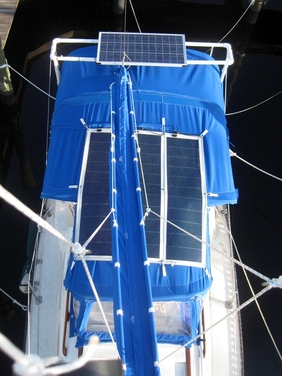
                                          Before we left Hampton, we had mounted the 3 flexible solar panels on the bimini, to take advantage of solar power for recharging the batteries.  However, we had carried a large, fixed panel on deck, but not connected.  One of Dave’s projects for our time in Palm Coast was to find a way to mount this panel.  Since this was going to be an experiment, he was looking for an inexpensive, but secure way to position it, so we could try it out before investing a lot money into a permanent structure.  Scouring the aisles of the consignment stores in St. Augustine and Daytona, we kept trying to come up with a solution only to be stymied by one thing or another.  We were running out of time and Dave was becoming frustrated.  On the last morning with the car, he came up with a solution.  We would build a frame out of 1 ¼ “ PVC that would stand on deck and reach across the back of the bimini.  He bought all the pipes, connectors and PVC cement at Home Depot and put them in a pile on the dock. Hopefully, we didn’t forget anything.

                                          The next day, we began to construct the structure, starting with the rectangular frame that the panel would sit on.  Once we were happy with a design for this, we took all the pieces to shore and then cemented them in place and attached the solar panel to the structure.  The last step had to be done back on the boat.  We would have to put the supports in place (which hopefully we had cut to the right length) and then cement them into their connectors.  We managed to get this done without getting the cement on the bimini or each other.  Then Dave began lashing the structure to the stern rail and the toe rail.  It seemed strong enough.  It got its first test a day later, when a cold front came through and the winds blew hard all day long.  Everything stayed put.  Now we have increased our solar charging by almost 100% and will be better able to keep up with our daily power demands.

                                          More Boat Stuff

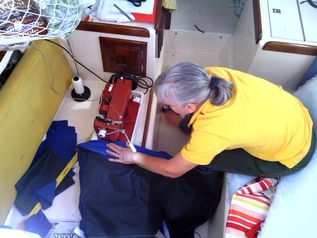
                                          Beside the big projects, we tackled a few smaller ones as well.  Dave installed a new LED strip light in the center of the Main Saloon, to give us more light to read by.  Cathy made a netting for the companionway to keep out the no-see-ums that were starting to bother us whenever the weather warmed up enough to make them active (which was more frequent now that we were in Florida).  Dave installed a heavy-duty AC outlet to use for a heater or A/C unit, having learned a lesson from Orion’s problems.  A member of the Coast Guard Auxiliary gave both Orion Jr and the dinghy their annual Vessel Safety Inspection, which they both passed.   And, speaking of the dinghy, we took it off the deck and got it ready to deploy, which required buying and installing new transom bolts, some towing rings, polishing the exterior with Armour-All and putting the registration decal on.  It now rides behind us instead of on deck.

                                          Moving Again

                                          So, with engines in place and dinghy riding behind, we pulled out of Palm Coast on a foggy Thursday morning (January 12th) to begin moving south again.  After a stop for fuel at Halifax Harbor in Daytona, we anchored out just south of the marina for our first night out.  A front was moving through, which helped us by giving us wind behind, but the same north wind started making it colder.  Having left Palm Coast in shorts, we quickly switched them for jeans and sweatshirts for the next leg from Daytona south to Titusville. 

                                          With the wind moderating during the day, we made what turned out to be a fateful decision, and chose to anchor just north of the Addison Point bridge for the night.  A final check of the weather before going to bed told us that the winds were increasing dramatically overnight from the northwest – the direction of the longest fetch.  We were in for a bumpy night.  Dave put an extra line on the dinghy and switched to an anchor bridle to have 2 points of attachment for the anchor.  We bobbed and churned all night long, affording little sleep.  The anchor held, but as the winds and waves kicked up a little more just before dawn, we realized we would have to wait until they died down some before Dave could safely go forward to pull anchor. 

                                          By 8:30, the conditions were calming down, and we got underway.  However, this day was the coldest of all.  With the strong north winds and the sun slipping behind the clouds more than it was out, we just couldn’t get warm.  We were relieved beyond words to finally pull into Telemar Bay Marina and take a deliciously hot shower.  Aaah!

                                          Picture
                                          Cathy helps with a magic trick at Disney
                                          Family Fun

                                           Just after the first of the year, we had a chance to get together with Dave’s sister’s Wendy and her husband Dave before they headed back to NY from their condo in Bradenton.  We met them at Disney’s Marketplace for dinner and then went to the Boardwalk to see street performers.  However, it was cold enough that the “street” was moved inside, much to our relief.  We even got volunteered for a “boat theme” magic trick by one of the magicians, before we went out to see the Epcot fireworks display.  


                                          Picture
                                          Jeff on Orion Jr

                                          Our nephew Jeff had moved to Melbourne last spring to start a new job and we were delighted to stop by and see him for the first time in his new digs.  We had a dinner together the first night and escaped the cold night by spending the night in his apartment.  After church the next day, we took him for a sail on Orion Jr, and had a beautiful day on the water.  It was sunny and much warmer and the light breeze was just enough to fill the headsail for a leisurely trip back to the marina.  We said goodbye to Jeff and prepared to head out early the next morning, still making our way to the Okeechobee Waterway and Florida’s west coast.


                                          Picture
                                          Jeff takes the Helm
                                          Add Comment
                                           

                                            Archives

                                            February 2012
                                            January 2012


                                          Create a free website with Weebly