Late August - Moving Again 09/04/2010
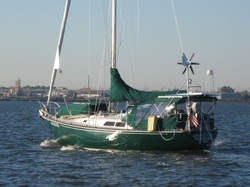
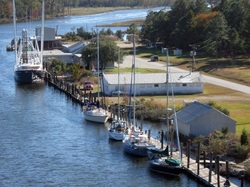
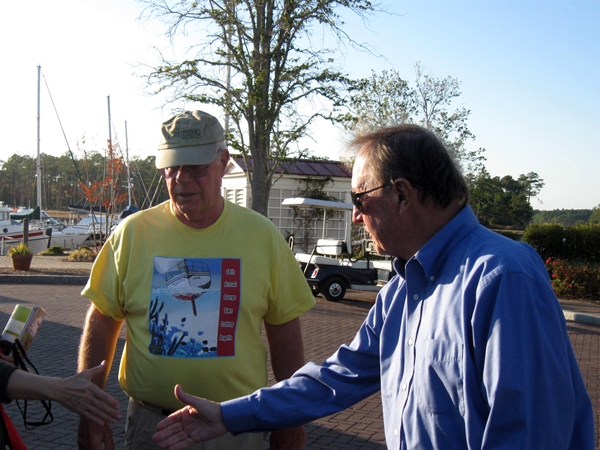
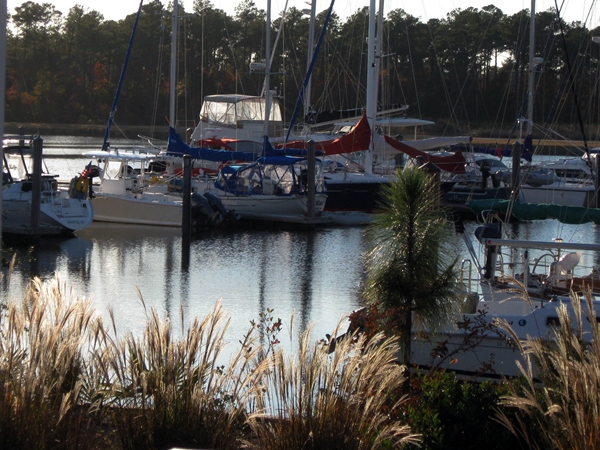
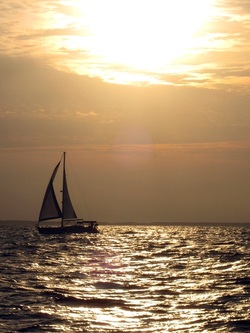
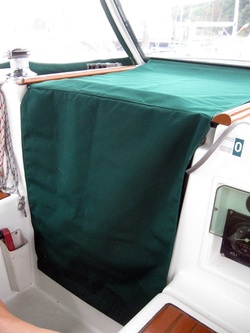
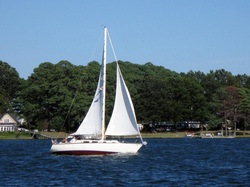
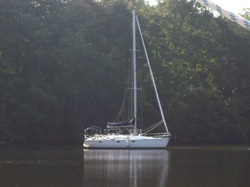
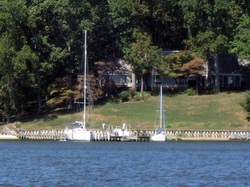
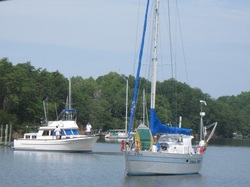
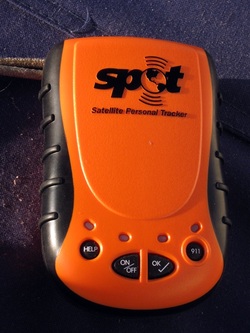
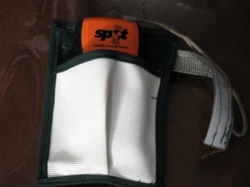
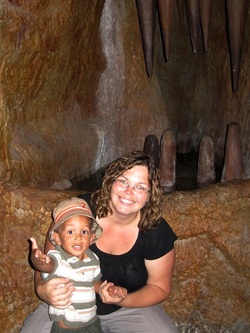
![]() Boat under sail in Fishing Bay We finally threw off the docklines for more than a short sail, and headed up to Deltaville for some boat work. Unfortunately, Hurricane Earl was on the move as well, and he interrupted our plans a bit, which turned out to be his only effect on us. We’re not done with Hampton yet, but our time remaining is getting short. ![]() Calm times in Deltaville before Earl EARL-y Out We had been watching the tropical storms start forming one after another off Africa and knew it was only a matter of time before we had to deal with one coming close to us. Danielle was the first threat, but she decided to stay well offshore. But Earl was starting to look suspicious. The boatyard began to buzz with discussions about the storm. Was it a threat or not? Orion was docked in the boatyard’s service slip next to the TravelLift. As Tuesday morning arrived, we awoke to the sound of the crane moving and began to watch a procession of boats being hauled and transported into the yard. Needless to say, this got our attention. Dave went off to consult with other cruisers and the boatyard about alternatives for weathering the storm, while Cathy made preparations on the boat. The remaining enclosure panels would need to come down. Before doing so, Cathy cleaned and polished them. If we were going to be at anchor for several days, we would need some more groceries and would need to do laundry. We also needed gas for the generator and the dinghy. When Dave returned, he had our options laid out. Larry on The Dove, Larry and Lynn on Two Morrows, and Michael on Wind in the Willows were on the hard in the boatyard, and had various experiences to share, having weathered storms nearby before. The boatyard management also had their experience and recommendations. It boiled down to this. We could haul the boat, stay where we were, or move to find hurricane protection. We didn’t think staying put had much appeal. Any storm surge would put our dock well under water. Getting hauled would be the safest alternative, but we knew that once we came out, we wouldn’t go back in for a couple of months. To hedge our bets, Dave had already placed our name on the haulout list. We could take it off if wanted, but it was already too late to choose to add it. Once hauled, we would need to shift our attention to take advantage of time on the hard, doing boat projects that can only be done with the boat out of the water. Having been hauled each of the last 2 years though, we were really hoping to skip the haul-out this year. That left moving to a safer place. In our discussions over the last 2 days, a local hurricane hole kept coming up – Wilton Creek. It is about 10 miles further up the Piankatank from Jackson Creek, where Deltaville Boatyard is located. Dave looked it up on a chart and plotted a route there. It looked like there would be plenty of protection and enough room to anchor comfortably, as long as not too many other boats had the same idea. But what about the storm? How bad was it going to be? We kept watching the updates from NOAA and the weather channel. It was hard to tell what surge there would be, but the winds did not seem too bad. At worst, gusting to 45 knots. We felt we could weather that easily in a protected anchorage. So, we finally decided that we would take our chances in the water, and move to Wilton Creek. To ensure we still had options if we got there and didn’t like it, we decided to head over Tuesday afternoon. If we liked it, we would simply stay through the storm. By 3:30pm, the laundry was done, and Dave was back from running some errands in town and getting gas. We were ready to head out. With no wind to sail to, we simply motored our way up the Piankatank, following its twists and turns until we neared the Rt 3 bridge, where we hung a right to follow the stakes marking the entrance to Wilton Creek. ![]() The lone anchored boat in Wilton Creek At the second bend, we saw the first and only boat anchored in the creek. As the creek opened up toward the north, there were high banks, topped with tall trees surrounding us on all sides. We chose a spot to anchor around the 2nd bend in 7-8 feet of water at low tide. The anchor set well, and we had 2 days for it to dig in well before the storm. We would spend Wednesday continuing our preparations for the storm. Cathy stowed the enclosure, while Dave got the generator going for the first time in 5 months. We launched the dinghy, with plans to explore the creek, as well as making sure it was available in the unlikely event we needed to get off the boat. However, the dinghy motor didn’t start as easily as the generator. The gas that was sitting in it from the Bahamas did not age well, even though it was ethanol free. We needed to empty the tank and then get new gas. But in our haste to leave, we didn’t have enough gas to mix a fresh batch for the dinghy motor. ![]() Andy visits us from shore We were in luck however. We had been anchored only an hour or so before we met Helen and Andy, who were checking out the creek from their home on the Piankatank. They were assessing whether they needed to move their sailboat back into the protection of Wilton Creek. We chatted about the prospects for the storm, and agreed to check in the next day. We offered to help them move their boat, and they offered to help us if we needed anything. When they arrived the next day, they agreed to fill our gas tank for the dinghy. Dave proceeded to drain the dinghy motor and fill it with the new gas. However, he still wasn’t in the clear, since he discovered the fuel cut-off was stuck in the closed position. Luckily, he had had an outlet added to enable connection to an external fuel tank. He used this connection and managed to re-plumb the fuel line. With that change, the dinghy motor started up and stayed running. We were in business. ![]() Helen and Andy's home on the Piankatank We used the dinghy to visit Helen and Andy to thank them for their help. Their home on the Piankatank had a beautiful view of the river. As we returned to the boat, we met the first of a few anchored neighbors. Hampton Rose had arrived after a trip up from Little Creek, near Virginia Beach. They were to be joined the next day, Thursday, by 5 more boats. Meanwhile the owners of the boats docked nearby were busy adding lines. Dave dinghyed over to help attach the lines to the outer pilings. He even tried to help deploy an anchor for a trawler, but the weight of the anchor and chain overwhelmed our little dinghy. As a way of saying thanks, we were invited to the dock for a pre-storm party, and got to meet many of the boat owners who lived in the complex nearby, as well as some of our anchored neighbors. ![]() Boats anchoring Wilton Creek After such a big hype, though, Earl was a bit of a letdown. He brought some much-needed rain, along with wind and cooler temperatures that were a relief from the sweltering heat of the days preceding. But there was no surge, and the winds barely exceeded 10 knots. We used the rainwater to help clean the deck, which was the least cluttered it had been in a year. By early afternoon, the rain had stopped and the sun began to appear. We stayed in the creek until mid-day on Saturday, using the time to put Orion back together and to take some time to explore the creek by dinghy. Overall, we were glad we had dodged this bullet. ![]() SPOT Personal Tracker Spotting Orion We have added a new capability for tracking Orion’s movements, with our recent purchase of a SPOT Personal Tracker device. It communicates our position via satellite. We can either choose to manually send our position at regular intervals or have it automatically send a position. We are currently manually sending the position every time we do a log entry, which is once an hour while we are underway. We have configured our website to show these position updates on a new Location page. It makes it easier for family and friends to understand where we are, especially in our more remote travels. The device also has a “Help” and a “911” feature. If we press the “Help” button, an e-mail with our position will be sent to our emergency contacts. If we press the “911” button, the Spot Control Center will be notified. They will attempt to verify the call by contacting our emergency contacts, and then activate the emergency response unit applicable to our location, normally the Coast Guard. We hope to never need this feature, but it is good to have more redundancy for distress calls in the event of an emergency. ![]() New cockpit pocket for the SPOT Boat Stuff - Despite our early departure from Deltaville, Cathy was able to use her time there to make another pocket to house our new Spot device in the cockpit. - We were disappointed when on our first trip up the Bay, we turned on our AIS only to find out we were receiving no signals. Once we arrived in Deltaville, Dave discovered the problem was simply a loose wire that he had forgotten to permanently attach. Once he secured the wire, the signals started appearing again. - After a brief trip out on Orion before leaving for Deltaville, we discovered that the growth on Orion’s bottom and running gear were affecting her performance, losing us up to a knot of speed. We had a diver come to clean the bottom and change the zinc before we left, which should be good enough to keep her running through October. ![]() Sue and crew aboard Daisy Sue Daisy Sue sets sail We have been helping our friend, Sue, get her boat ready to take out of the slip under its own power. This involved getting her engine impeller changed, and getting the safety systems and gear ready to pass inspection. Her navigation lights needed work, some of which was just cleaning corroded connections. A more significant project was wiring her steaming light, which was mounted, but had not been connected to a power source. We helped her climb the mast for the first time to check the bulb, and then Dave helped her trace the wiring back to the panel and re-connect it to a breaker. With just minutes to spare before the Coast Guard Auxillary inspector arrived, she completed the repairs, passed the inspection and received her sticker. A few days later, we joined her as she took Daisy Sue out for the first time on a sail, marking a milestone for both Sue and the boat. ![]() Bonnie and Troy by cave exhibit at VLM Family and Friends We were treated to one more visit from our daughter’s family, when they came to see the Virginia Living Museum and take a fishing trip out on the bay, before school began again. There were 2 more dock parties as well, celebrating summer’s end and our neighbor’s 60th birthday. . ![]() Woody's 60th birthday party We plan to stay in Hampton for the big Bay Days festival this weekend, and then move on north, as we start the final preparations for the trip south in October. Late July / Early August - Lazy Days 08/15/2010
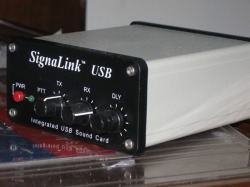
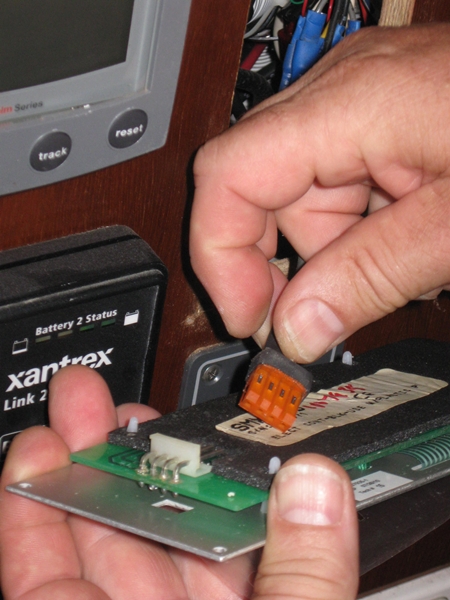
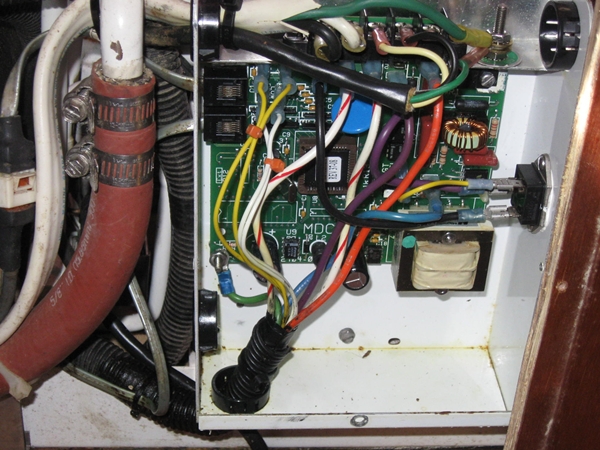
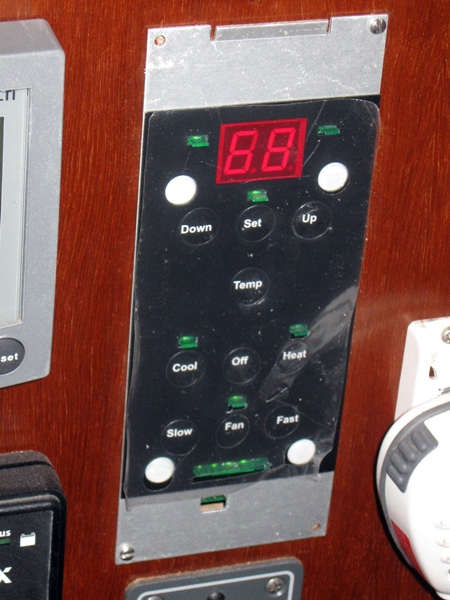
![]() This summer’s heat wave has encouraged us to look for projects and diversions that take us out of the soaring temperatures and into cooler climes. We’ve made more trips to see family and helped out friends in Hampton as well, but managed to find some time to address some projects on Orion – like that troublesome air conditioning. ![]() Keeping Cool After discussing our A/C problems with an expert in Cruisair systems that we trust, we focused in on two likely problem areas: the SMX II Control panel and the internal circuit board in the unit. The SMX II control panel had not worked to allow us to change the temperature or even change from cooling to heating mode for over 2 years. We had no reason to know which of the two was the problem, so Dave searched for a way to isolate it. He found the solution at a place called Flight Systems, Inc. They offered the service of checking out both of the panels and repairing one or both for a reasonable fee. If either had no problems, there would be no charge. So we carefully removed both boards, packaged them up and sent them off. In less than a week, they were returned. The only one with problems was the control panel. Once re-installed, it worked as it had originally: displaying the cabin temperature and the cooling target temperature, allowing us to change the target and switch from cooling to heating mode. So, we were feeling pretty proud of ourselves that we had the problem solved, when late one evening it stopped working abruptly with a before-unseen error message on the control panel. The message indicated a high pressure condition existed, which could be related to restricted water flow. We cleaned out the strainer, allowing the system to start working again. It stayed working all the next day. The next night, however, Cathy woke up wondering why the cabin seemed so hot, only to discover the AC had turned off again. After checking the strainer, it was becoming obvious that this wasn’t what was limiting the water flow. The next morning we tried flushing the system with fresh water, but we still couldn’t get it to restart. More consultations led Dave to believe the problem lay with our pump. A neighbor on the dock had a used Cruisair pump that we could borrow to get our system re-started and confirm the pump to be the root of the problem. The pump enabled the AC to start again (leading to rejoicing among the crew), and a new one was promptly ordered. We chose a March pump, ordered from Tri-State pumps, which arrived shortly after. It was quickly installed and is working great, but has not yet been time tested. We remain optimistic that this will solve the problem once and for all, although we’ve been fooled before. ![]() A new AC outlet made it easier to run our icemaker. It’s Electric Our air conditioning woes had caused us to borrow window units more than once for several days at a time. This and the daily use of the ice maker caused a spider’s web of cords through the cabin, which we decided to solve by installing a new AC GFI outlet under the nav station. Following the path of existing wires, Dave connected the outlet to the existing AC breaker, a short run from the location of the outlet. Since we keep the ice machine under the nav station, the cord was now neatly out of the way. ![]() The burned out shore power cord Dave finished his electrical exercises by installing a new end to the power cord damaged earlier in the summer. ![]() SignaLink Device Staying in Touch Dave has been staying in touch with a project, called WINMOR, that will provide e-mail capability through the Ham radio, using software to perform the function that the very pricey Pactor modem has traditionally provided. The software is in Beta test, meaning it has advanced to the point that it is ready to give it a try. Dave confirmed that he needed some hardware to make it work. This included a 6-pin data cable for the Ham radio that would connect to a SignaLink USB device to interpret the sound signals from the radio and communicate them to the PC software and vice versa. (The cost of this equipment is about one-tenth that of a solution using a Pactor modem, but will be slightly slower.) With the device in place, Dave was able to make a connection, but so far hasn't successfully sent an e-mail. He thinks he's close though. More to come on this. When it is working, we plan to use this capability to receive weather GRIB files while underway or in remote areas and to send e-mail status/travel updates to our family as well. Other Boat Stuff Cathy spent her time on sewing projects (re-stitching another failing anchor bag), updating the boat inventory and ordering supplies for the fall. Dave repaired our dinghy bridle (used to haul the dinghy out of the water), replacing its rusted hardware with some made of stainless steel. ![]() Troy making faces in the mirror Work and Play From drywall installation at our daughter’s house, to running cables at Steve’s house, to oil changes and engine maintenance on Sue’s boat, we manage to keep busy while getting to visit family and friends. Our grandson, Jayden, celebrated his 4th birthday as July came to a close. We joined the family in Richmond to celebrate, and followed this with a trip to take Droz and Jayden to NC to visit with Cathy’s family. ![]() Jayden's birthday party We enjoyed visits from our children and grandchildren as we explored some new and some familiar sites in the area. We visited the Portsmouth Children’s Museum with Bonnie’s family one Sunday in July. Droz came to visit for a week on the boat. While there we took in the Virginia Living Museum, and made a return trip to the nearby Virginia Air and Space Center. As the week ended, Adam and his family came to visit for the day. In getting around Hampton without a car (most of the time), we’ve made much more use of the bus system, making our way to the mall, to Norfolk, Portsmouth, Suffolk and even to the local Red Cross chapter, where we taught 3 First Aid / CPR courses over the course of a week. It’s pretty convenient. Travel Plans We have made plans to visit Deltaville as August ends, followed by some trips to northern Va and Rochester in September. We plan to move Orion north into the bay after the local Bay Days festival the 2nd weekend in September. Maybe we’ll see some of you when we do. Late June / Early July - Hampton is Hot! 07/15/2010
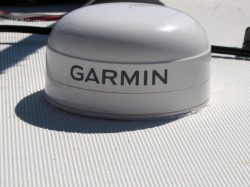
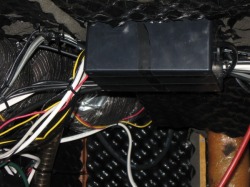
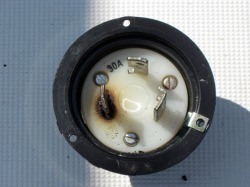
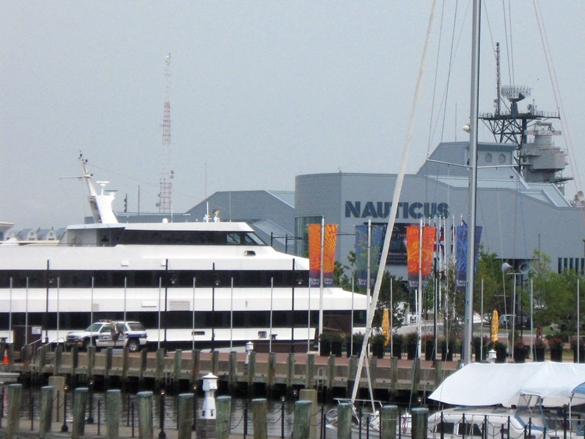
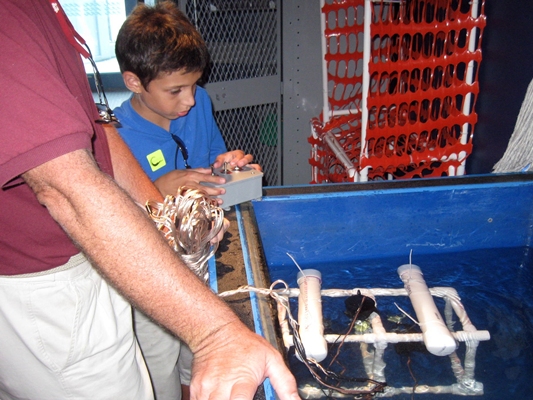
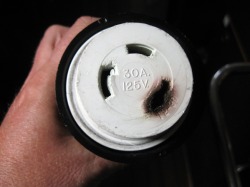
![]() Hampton turned 400 years old on July 9th, with a combined birthday celebration and Pirate Festival weekend bringing in its 5th century in style. Unfortunately, we have another reason to remember that date, since it was the day our air conditioning stopped working. The daily high temperatures have rarely been below 95 since. ![]() Replacement Garmin GPS 17X mounted on the deck Fixing Our Position We finally received our replacement GPS unit to tie into the Garmin 5208 chartplotter. Garmin had made some engineering changes, so the replacement unit had a different mounting footprint from the original. The screw holes didn’t line up exactly and the opening for the cable needed to be expanded. As a result, we needed to fill the screw holes with epoxy and then drill out new holes. Once this was done, we mounted the GPS, and re-ran the cables to the engine room, where they connected to the chartplotter. Dave installed a new box to house the connections, making them much neater and more protected. ![]() New Junction Box The result was encouraging. The chartplotter showed our position without any of the error messages we had been receiving in May. AIS and radar continued to work, and the position showed as before on our Raymarine instruments and VHF radio. At this point, we can only keep our fingers crossed that our problems with the unit are behind us. We look forward to using the new AIS capability on our next trip out into the Bay. As a little compensation for the difficulties with the many chartplotters, Garmin sent Dave a complimentary copy of its Homeport route planning software. He has used it to create, organize and load routes to the chartplotter, a process which requires many fewer steps than with Mapsource, its predecessor. As with any change, there are features that take some getting used to, but Dave believes this will become the new primary source for all of his routes and waypoints ![]() Damaged shore power inlet Shore Power For the 2nd time in a couple of years, we had to replace our shore power inlet, when one of the prongs showed signs that too much heat had charred the surface around it. Having done this before, Dave was able to make the switch much faster this time, after receiving the replacement parts. ![]() A new neighbor joins us on Orion. Moving In It started innocently enough. We got a call from Archie, the owner of Joy’s Marina, asking if we could help someone move their boat from a nearby marina over to a slip at Joy’s. It was a sailboat, and the owner was new to the boat and new to sailing. So, having us on board might make it easier to move the boat. When we arrived at the boat, slightly ahead of Sue, the new owner, we started to study the project in front of us. We knew a lot about Orion. But there are so many things we take for granted on our boat that we needed to understand on someone else’s. When Sue arrived, she was able to give us some clues, but she admitted there was a lot she didn’t know. So, we called the previous owner. The picture gradually began to take shape. The boat had sat in its slip without moving for years. The engine had been started successfully recently, but not to move the boat. Oh, and by the way, the channel into the marina would have just barely enough water for us to leave as we headed toward a new moon low tide. With the water falling, we tried to get underway quickly, but discovered that there was no water coming out of the engine’s raw water output. After ensuring the raw water intake was open, that left the likely prospect that the impeller needed replacing. Taking her out of the slip under her own power wouldn’t work. Archie then offered to tow her. He and Dave went to launch his boat while Cathy and Sue continued to ready the boat. Meanwhile, time is ticking and the water is still falling. Before too long, Dave and Archie returned. We attached a tow line and cast off the dock lines. We steered toward the curve in the channel, using a quirky depth sounder and the instructions from the previous owner about how to find the deepest water. Unfortunately, it didn’t quite work. We were quickly aground. After some maneuvering, Archie managed to get her off and the rest of the trip to Joy’s Marina was uneventful. Since then, we have helped Sue with some ideas about how to get her boat moving again and build her confidence along the way. We helped her move some of her things out of her apartment one day, and took her for a ride on Bay Dreamer and Orion. Although the sailing wasn’t great on either trip, she’s getting a little more experience in the other aspects of boating – such as navigation, docking, and, oh yes, evading storms. ![]() Droz and dad put in some family time More Family Time We spent much of the past month with family, which limited work time on Orion. We helped our son’s family move from Emporia to Richmond and returned to visit them on July 4th, when Dave’s parents and sister had arrived from points north for a visit. Our grandson, Droz, came to visit us for the week leading up to the Pirate Festival, which gave us time to enjoy his company. While Droz was with us, we did some sightseeing around Hampton Roads. One day, we took a trip to nearby Buckroe Beach with Krista and her boys. Another day, we took a bus trip to Norfolk, rode the ferry to Portsmouth and back and then took in Nauticus, a Maritime Museum, with lots of hands-on exhibits and the Battleship Wisconsin docked next door. It was a big hit. Keeping our cool So, how are we managing without A/C? We did OK for a few days, swimming when we could during the day and catching as much breeze as we could down below. However, it just wasn’t enough, since the humidity alone was enough to do us in. Put together with the soaring temperatures, and we knew we weren’t going to last much longer. However, we were once again saved by the kindness of friends as we took the loan of two different portable A/C units. These have made all the difference. And we are hopeful Orion’s unit will be fixed soon. Early June - Back to Hampton 06/15/2010
![]() Dave takes little Troy on a carousel ride We're spending more time in Hampton, but the roads between here and Emporia are becoming very familiar as we travel back and forth to see the grandkids. Garmin 5208 – The Saga Continues We received our chartplotter back from Garmin and re-connected it as soon as we got back to the boat. We were excited to see the AIS now working, which was easy to verify in the busy Hampton Roads harbor. The SD card reader also was working as it should. However, we still have a minor problem with it. The GPS still isn’t working, so the unit has no idea where we are. To confirm the problem was now isolated to the GPS (which is a separate component from the chartplotter), Dave connected our little Garmin GPS 76 to the chartplotter. Sure enough, our position was displayed as expected. After relaying this finding to Garmin, they agreed to send a replacement GPS. Since this unit is mounted into the deck, we won’t remove the old one until the new one arrives. Since we might need to use the GPS76 as a back-up in the future, Dave ran a more permanent wire from the chartplotter which can allow an easier connection. This enables us to take Orion out using the back-up GPS while we wait for the replacement GPS 17 to be installed. ![]() On the Water Although Orion’s been in Hampton over a month, we’ve spent very little time on her, with our travels back and forth to Emporia. So, when we finally got a chance to move her again, we decided to have her checked out by a diver. Her running gear was clear of barnacles, as were the thru-hulls, so a quick wipe-down and a zinc change got her ready to move. We were joined by our daughter, son-in-law and grandson for a fishing trip one afternoon. It was good to get Orion moving again, and we could try out our jury-rigged GPS installation. It wasn’t such a good day for fishing, although our son-in-law managed to catch about a dozen croakers, it wasn’t his best day. ![]() We also got a chance to take a trip on Bay Dreamer one Saturday evening, as we made our way down the Elizabeth River to see the Norfolk Harborfest fireworks. We are the Champions Steve invited us to the championship game of the Poquoson Little League “minors”, on which Krista’s oldest, Jared, played outfield. The Mets beat the Diamondbacks winning the championship in what became a runaway game, 11 to 6. We joined the team for a celebration afterward, which included lots of ice cream and cake. That’s the best kind. Late May - New Arrival 05/31/2010
![]() We’ve spent the latter part of May at our daughter’s house helping our son-in-law with some remodeling work in preparation for the arrival of our youngest grandchild. Taylor Marie was in a hurry however, and she arrived before the room was quite done. We'll have no trouble remembering her birthday, since she was born on our wedding anniversary. We took care of her big brother while Mom and Dad were at the hospital with the newborn. In the week and a half after her birth, we helped with the grandkids and finished enough of the remodeling work to allow the nursery to be turned over to Taylor. It's already been a busy summer, and we're just getting started. Early May - Heading Home 05/16/2010
![]() We made our way north over the final miles of the ICW and pulled into Hampton on the first Friday in May. As we’ve done for the past few years, we will stay here for a few months this summer, letting it serve as our base as we make road trips to see the family and spend time with our kids and our growing number of grandkids who live nearby. With Orion tucked into a slip at Joy’s Marina, we are settling in again and mapping out our plans for the summer. ![]() Clint and Dave confer about the route The Last 200 Miles After finishing our long hop outside from Charleston, we ended up in the South River, which lies west of the Neuse River opposite Oriental, NC, With Cathy’s brother-in-law Clint still on board, we headed out the next morning to make our way north to Dowry Creek, where we would stay for the next 2 days. With a fair amount of wind and a shorter distance to go, we sailed as much as we could, breezing along on the southwest winds up the Neuse until we followed the ICW’s 90 degree turn east into the Bay River. The winds now on the beam, Orion heeled over and took off for the short distance until the river narrowed for the entrance to the Hobucken Cut. We doused the sails, motoring through the cut and out Goose Creek until we reached the Pamlico River, where we unfurled them again and silenced the motor. As seems to be our luck, the wind gradually weakened, leaving us completely as we approached the entrance to the Pungo River. After searching the horizon in vain for evidence of the 15 to 20 knots forecast, we were thinking it was time to start the engine again. But before Cathy could put the key in the ignition, a puff arrived, then another and then we were moving again. With the wind’s increase in velocity, it shifted more to the Southeast, requiring a few jibes to make our course up the Pungo. When we followed its turn to the east, we were now close hauled and making 8 knots. But this was going to be short-lived, since we were only a couple miles from our destination – Dowry Creek Marina. With the forecast over the next few days, we realized this was likely to be the last sail for several days. So we were glad for the time we got, but wishing for Clint’s sake it could have been longer. With stormy weather forecast and not wanting to arrive in Hampton until Friday, we put in at the marina for 2 nights. It was going to be an unseasonably hot couple of days with temperatures soaring to the 90’s. We were glad for power to run the air conditioning and the ice machine. Clint had never seen Belhaven, so we took a short ride in the marina’s courtesy car to drive through the little town. It had changed little since our last visit a couple of years earlier. After grabbing an ice cream cone in town, we drove back to the marina for a short walk and a cooling dip in the pool. In the evening, we gathered with our fellow cruisers in the comfortable marina lounge, sharing stories of our winter’s adventures. ![]() Sunset over the Alligator River The storms were slow to arrive and had not cleared completely when we awoke the next morning. So we had planned a late start, since we were only traveling about 25 miles to the south end of the Alligator River. With little wind and most of the day’s travel on the long Alligator-Pungo Canal, it was a motoring trip. Unlike our travel day on Sunday, where we were dodging dozens of boats, we saw almost no one this day. We joined only one other boat when we set anchor in the late afternoon. As the day drew to an end, the overcast skies finally broke, giving us a spectacular sunset, before we had to scurry below to escape the bugs. To our surprise, we received a voice mail message shortly after anchoring. This is the most remote section of the ICW. Cathy was able to pull the voice mail, which was a message for Clint. To our endless surprise, Clint was able to connect with the caller and even join a conference call. So we were surrounded by wilderness, but had better reception than we had in Belhaven. Who knew? ![]() Dave and Clint pull anchor The next morning dawned foggy (and buggy), as we pulled anchor just after sun-up to head north to Coinjock. The fog was a result of the still air, so it was another motoring day up the Alligator and across the Albemarle. By the time we entered the North River, the winds had picked up enough to sail for about an hour, but as the river narrowed, the winds were variable, so we furled the sails and motored the rest of the way to Coinjock. We had planned to arrive at Great Bridge on Thursday to rendezvous with Steve. He would join us there for the final leg to Hampton and get some experience going through the locks and opening bridges on the Elizabeth River. We pulled onto the free dock between the bridge and lock shortly after one – in time to walk down to get some groceries, propane and, of course, ice cream. It was another stifling hot day, and the bugs descended at sunset. We put in our screens for only the 2nd time since we’ve been on Orion. By late evening a cold front had moved through and it was finally cool enough to sleep. Steve arrived early the next morning. With the rush hour bridge restrictions, we decided to request an 8am lock opening. We were alone in the lock. Knowing this, it would have made more sense to make this later, since we had a long wait for the Steel Bridge afterwards. It was a busy trip up the Elizabeth River, with lots of tugs, Navy Ships, Coast Guard, etc. By the time we reached mile zero, the river had opened up to allow us to sail the rest of the way to the Hampton River. Pulling into the slip around 2pm, we had a late lunch and then put the boat back in order. After a celebratory dinner at Harpoon Larry’s, we prepared to say goodbye to Clint the next morning. He would be taking a train south, while we would be driving to our son’s house for a Mother’s Day picnic. It had been a great time, and we really enjoyed his company. Boat Stuff We had a little time to do boat projects in between travel. Using an idea from Bette on Inspiration, Cathy made some tubes to make it easier to stow the enclosure curtains, keeping them in good shape, but taking up less space than lying flat. She cut a 3” PVC pipe to the widths of the curtains, wrapped a towel around the pipe, and sewed a sheet to it. The pipes would accommodate 2 panels each and could be stowed on the V-Berth shelves. Thanks, Bette! After pulling into Dowry Creek, we did an oil change, our first since leaving the Bahamas. But the biggest issue has become the problems with our Garmin 5208 chartplotter. We had already been planning to send it back it to resolve a voltage issue that was preventing us from displaying AIS signals at the helm. However, just before we left Charleston, the SD card-reader would no longer accept the SD cards, meaning Dave could no longer load routes and waypoints to the helm from his stored files. We had to load these all manually, which took several hours, although not as long as it had during that first year heading south. But trouble comes in threes and our third problem with the unit was the killer. As we were leaving Dowry Creek, the unit kept losing the GPS signal. After 15 minutes, the problem went away, but 2 days later when leaving Coinjock, it was back. And this time, it persisted. Without our position on the unit, it kept sending messages and eventually turned itself off. We already had our small Garmin 76 mounted on the helm for anchoring and timing to bridges, so we started using it as a backup, getting a sense of upcoming turns and distances. Dave managed to disconnect the GPS by removing its fuse, so we could use the 5208’s charts. The unit has now been removed and sent back to Garmin. Since this will be the fourth replacement, we are more than a little curious to see how well the next one holds up. Family, Friends and Other Notables We’ve managed to spend a couple of weekends in Emporia with the kids and grandkids. We took in a Roanoke River festival in Roanoke Rapids with Adam’s family and followed up with a Mother’s Day picnic at his house. The next weekend, we spent time at Bonnie and Troy’s helping finish an attic room, which will accommodate the furniture and other items still in the room which will become the next nursery in a few weeks. Then, on Sunday, we enjoyed a surprise birthday party for Adam. We noticed The Dove on the dock at the Hampton Public Piers shortly after our arrival, and invited Larry over for dinner one night, as he waited out some weather. It was good to catch up with him once more before he headed to Deltaville to haul the boat. ![]() Hampton was buzzing when we arrived on Friday the 7th, but it wasn’t because of our arrival, but the upcoming commencement address being given by President Obama at Hampton University on Sunday, May 9th. Our marina sits just off the campus of Hampton University, so the Coast Guard was very close that morning, even pulling into one of the slips briefly, while the helicopters patrolled overhead. We didn’t see the President, but we were close enough to hear him introduced to the graduates. Staying Put for A While We’ll be in and out of Hampton, working on the boat, swimming at the nearby community center and visiting family and friends. If you’re in the neighborhood, give us a call. Late April - All Good Things 04/30/2010
![]() We knew our time in Charleston had to come to an end. It just seemed to sneak up on us faster than we wished. We were torn between our love of this wonderful city and the desire to get north to see family. As we waved goodbye to Marianna, we knew we would soon need to be doing the same ourselves. We started to follow their progress and start to turn our attention to our own travel plans. ![]() Clint takes the helm Orion Takes on Crew We knew we wanted to be in Hampton by mid-May, and wanted to travel outside as much of the trip as possible. Being relatively close to NC on both ends of the trip, we invited Cathy’s brother-in-law Clint to join us for the trip. Clint’s last trip out on Orion had been 5 years ago, when we were painfully new at sailing. After a couple of days bobbing on a languid Chespeake Bay with no wind in the sails, we thought he would enjoy another chance to maybe get some real sailing in. He would also be a help on the longer runs and would get to sail some on familiar and some not-so-familiar waters. He agreed to join us and made his way south, arriving on the train Tuesday, April 27th. ![]() Dave explains the weather forecast We put him to work almost immediately. Dave began showing him all the boat systems – the engine, the instruments, the batteries, etc. Dave showed him his sources for weather and how he went about interpreting it. He went over the watch schedule for our offshore runs, the log books, the radios and the list goes on. Cathy spent this time preparing meals for the trip, which would last at a minimum two days, meaning a couple of lunches and suppers, along with some snacks that needed to be readied. ![]() Flat Calm as we depart Charleston In studying the weather, Dave began to see a window to head out on Thursday, April 29th. Unlike most of our previous outside runs, we were hoping to just sail as much of the trip as possible. That meant that we needed a window with enough wind to sail, but from a direction that would keep the seas manageable. We were beginning to see a long period of sustained southwest winds that would do the trick. Since the weather seemed to be holding, we headed out mid-morning along with Pagan Chant, our neighbor on the dock. The morning’s flat calm conditions were gradually replaced with a steady southwest breeze as predicted, and by early afternoon, we were zipping along. Pagan Chant decided to head for Southport, so we said goodbye earlier than we expected. Since we were heading for a least Beaufort, and maybe a trip around Hatteras to Hampton, we pointed further east toward a point off Frying Pan Shoals and sailed into the night. ![]() By early morning, the winds were too light to sail. We started the engine and motored through the day until once again the wind picked up in the afternoon. We assessed the situation after supper and decided not to attempt the run around Hatteras. That meant we needed to aim for the Beaufort inlet. However, we didn’t want to come in before sunrise. So, we set a course that should eat up the hours until sun-up, reefing the headsail to de-power the boat and slow her down. Unfortunately, we kept doing better than we expected. As we neared the inlet, we took in the headsail completely and just sailed on the main alone. By this time the flood current was giving us a boost as well. We managed to sail around until the eastern horizon became light enough to douse the sail and motor into the inlet. ![]() The sun sets off NC on Friday By early afternoon, we had sailed up the Neuse to the South River, where we anchored along with a number of weekend sailors. We were tired, but felt good about the trip, having sailed for 35 of the 52 hour run. We still had some work to restore order to the cabins below, top off the fuel tanks and prepare routes for the next couple of days. However, the steaks on the grill never tasted so good, since we felt we had earned them this time. ![]() Dinner at Hyman's with Bill and Bette Charleston – The Last Hurrah With the comings and goings of other boaters, we got to enjoy the company of both new and old friends. Bill and Bette from Inspiration joined us for the free Star Trek moving on their first day in Charleston and later at Hyman’s Seafood for a farewell dinner. Larry on The Dove came aboard one rainy Sunday to catch up on his winter travels and later we met him and his fellow traveler, Victoria on Malie, who was single-handing as well. We happened to take the same tour of the Calhoun Mansion one afternoon, which was an elaborate mansion built with the fortunes made in blockade-running during the Civil War, and restored to its former glory by its current occupants after years of decline. Carolyn and Keith on Whim were at the Maritime Center when we arrived, having recently brought the boat down from Beaufort with plans to sail back to Maine for the summer. Patty and Joe on Acacia were our neighbors for a few days. They had some troubles with their electronic charts and GPS interface on their computer. Dave seemed to be able to resolve most of the problems so that they could now use them underway, much to their delight. We took in an Earth Day film festival at the nearby Hippodrome theater, along with an “after party” that had a bluegrass band and good food. ![]() And for the first time, we were able to try the wonderful food prepared by the St. Phillip’s Episcopal ladies in their “Tea Room” fundraiser, held once a year in April. Okra gumbo and pecan pie were a southern delight, although not necessarily Dave’s first choice. We discovered the wonderful fare at Hyman’s Seafood, enjoying it so much we returned a couple more times in our visit. The owners have a custom of visiting every table during the evening, and there was no question that he recognized us by our 3rd visit. We told him it would be at least 6 months before we could return however. (Not Much) Boat Stuff We managed to squeeze in a little boat stuff. Cathy was able to scrub the V-berth well, since we had to empty it for Clint’s arrival. Dave equalized the batteries, which are doing very well after a winter’s use. He also managed to convert a string of 110V LED Christmas lights into a 12V strip after some trial and error. When the experiment seemed to work, he soldered the connections and installed them in the cockpit. ![]() Serenity Nycole Family News We were pleased to welcome the newest addition to our family, Serenity Nycole, born to our son Adam and Christina on December 12th. She is a lovely little girl. Next stops We’ll be headed up through NC to arrive in Hampton Roads by Mother’s Day if the weather holds. Early April - Relaxing in Charleston 04/25/2010
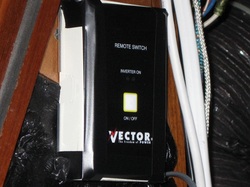
![]() It’s been two weeks since we pulled into Charleston, and we’ve settled in so well, we may need to be pushed out of here when it comes time to leave. Pat left shortly after we arrived, anticipating the birth of a new grandson, who arrived on April 15th. Fred and Marianna remained behind, allowing time to enjoy the city and for the crew (Julie) to make a road trip. Although Marianna will be pulling out soon, (with another new crewmember, Isaac, on board), we will stay behind for another week or two before heading north again. ![]() Sunday’s highlight was an Easter egg hunt in the graveyard. Easter Sunday The first full day in Charleston after our arrival was Easter Sunday. We decided to go once again to the Circular Congregational Church for their early Easter service. Afterwards, we were invited to what turned out to be an amazing Sunday brunch, followed by an Easter egg hunt for the children in the only open space between the buildings – the graveyard. It was a lot of fun to watch (and maybe help a little with a few hints), and a tremendous metaphor for the day. The next weekend, we joined some members of the congregation to prepare and serve breakfast at a men’s shelter in a small way of giving back to the community. We don’t always get the chance to do this. ![]() Flying High Shortly after arriving, we learned that the US Navy Blue Angels were going to be performing over Charleston harbor in a couple of weeks. We decided to stay at least through the event, especially since it was going to be centered over the Maritime Center. It wasn’t hard to figure out when the jets had arrived, since the sound of them was deafening as they made maneuvers over and around us – first, in practice runs on Thursday and Friday, and then in the performances on Saturday and Sunday. Their precision flying and speed were amazing and awe-inspiring, and we couldn’t believe our luck at securing such a perfect ringside seat for all the action. We were even closer than the VIP seats, which were on shore just outside the Maritime Center building. (This location also created a minor inconvenience, by putting the marina offices and restrooms on the other side of a security barrier for 3 days.) ![]() Skimmer races ahead of us toward the finish line. Racing to the Finish The week of April 8 – 11th was Charleston Race Week. About 150 boats are engaged in races through the day on Friday, Saturday and Sunday of the event. Races take place both in the harbor, and out in the ocean. We would have normally paid little attention to the activities associated with this event, but that all changed when Dave jumped aboard another boat in the harbor to help it move from one slip to another in the marina. John on Ragtime was looking for crew to help him race his Gulfstar 44 ketch in the ocean races over the 3 days. After making sure that he understood our experience was limited to cruising, not racing, we agreed to join him. Fred joined us as well, contributing both his sailing and racing experience to the crew. ![]() Dave takes the helm during the downwind leg. We ended up racing 2 of the 3 days with – how shall we phrase it – mixed results. The conditions both days were windy and the ocean was rougher than we have generally experienced (with the possible exception of a few nasty inlets). On the first day, we managed to start and finish the first race, but we were only on the first of 4 legs in the 2nd race, when the headsail blew out and we had to “retire” for the day as they say in the racing world. We later learned that our first finish didn’t count, since we didn’t pass between the correct marks to indicate the finish line. That’s OK. Tomorrow is another day. ![]() Fred helps to raise the main sail. John pulled out his back-up headsail for the 2nd day’s racing, but it was having some problems, and we had trouble pointing very high. This proved problematic as we tried to tack across a narrow start line to begin the race. Although we were successful for the first race, we took too long in the second race, which disqualified us. So, once again, we decided to “retire” for the day. Since, in our first race, Cathy managed to aim for the wrong marks at the end of the 2nd leg of the course, we managed to be disqualified yet again and therefore got credit for neither of the races we entered that day. It wasn’t all a loss, though. We still had fun and learned a bit about racing in the process. We ended the 2nd day with a sail north up the Cooper River past the old Navy base. Since we’d never been that far north, we had a good time seeing this part of the river from the decks of Ragtime. ![]() Studying the racing rules. We probably should have done more of this. John and Anne had to leave for home unexpectedly the next morning, so Saturday’s contests were our last attempt to prove ourselves for this event. We still have quite a ways to go before we would go from calling ourselves cruisers to racers. And it’s a lot less to worry about when it’s on someone else’s boat. ![]() Dave and Fred enjoy the game. RiverDogs Baseball We took in two Charleston RiverDogs games at the Joe P. Riley stadium (the “Joe”), which backs up to the Citadel campus north of downtown. Since the first game was in the evening, we had to time our departure to make sure we didn’t miss the last bus back to town. We would have had no problems, except it was just our luck that the game was tied at the bottom of the 9th, as the tying run crossed the plate seconds before the final out. That meant extra innings. We stuck it out as long as we could, but finally had to leave as the 11th inning was about to begin. It turned out the RiverDogs beat the Lexington Legends by 1 in the 12th inning. We were glad we didn’t wait any longer, since we just made the last bus. Our second game was a day game (to ensure we had no bus problems) and was supposed to have an all-you-can-eat buffet. When we arrived, however, we were surrounded by thousands of kids from area schools. Apparently, we had chosen to attend on “Education Day”, and the usual buffet was not going to be held. Instead, we were offered a seat in a Sky Suite for the same price, where a waitress would take our orders and we could order as much as we wanted. That suited us fine, and we enjoyed a great view and some good food. It wasn’t so good for the River Dogs who lost the game to their opponents, the WV Power. Maybe next time. ![]() We picked up a new toilet to replace our broken one. Boat Stuff You may recall that we had a few items that broke down as we made the journey from the Bahamas to Charleston. First and foremost, there was the matter of a broken toilet that needed to be addressed. After checking with West Marine, the toilet was under warranty and “all” we had to do was return the old one in order to pick up a new one. This wasn’t going to be a pleasant task to take a used toilet by bus to West Marine. Luckily, when Dave mentioned this to the marina staff, someone was able to drive him to West Marine with the old toilet and bring him back with the new one. Having installed the original just last summer, Dave had a pretty good idea what would be involved. We had already pumped out the holding tank and rinsed it with water to minimize the mess. Dave then disconnected the old toilet. While it was out, Cathy cleaned behind it thoroughly. Then we put the new one back in without too much difficulty, considering that some of the connections are not the easiest to get at. It’s been working great since. Whew! ![]() The burnt out inverter has been removed. The other issue to be resolved was our burnt out inverter. It was a Peak 1200W inverter that Dave had installed in January. So, he contacted the company about the problem. They were very concerned about the issue and responsive in dealing with the problem. They immediately sent a replacement 1500W inverter and supplied a pre-paid UPS label for the return shipment of our damaged 1200W inverter. Unfortunately, we realized once the new one arrived that it lacked the remote switch. This is an important feature for us, since it allows us to turn the unit on without crawling back into the engine room. When we spoke again to the company about it, they told us they would ship a unit with a remote to us, but that we could keep the 1500W inverter for our trouble. They also said they would let us know what they found out about the damaged unit. ![]() Cathy working to win prizes. Work Hard, Play Hard So, the rest of our time in Charleston is being divided between work and play. We caught up with our mail, which generated several days of activities, including doing our taxes. The Maritime Center has a free washer and dryer, so one full day was taken up laundering clothes, including some of the mattress and cushion covers that got so damp in the cold last winter. (The Maritime Center happened to replace the dryer while we were here, making this less of a hassle, since the old one had trouble with large, heavy loads.) And the marina’s excellent WIFI connection allowed us to do some work on the internet that had been long delayed. To take a break from the work, we found a few diversions. We had arrived just in time for the free Movies in Marion Square on Thursday nights, and have taken in 2 of the 4 movies so far. We’ve even won a few T-shirts in the process. The Farmer’s Market started up the day we arrived, and we’ve managed to sample its ware on a couple of occasions. Then there are those baseball games, and time spent with Marianna before they have to leave, to name just a few. With a couple more weeks to go, we should have no problem finding ways to enjoy the time in this beautiful city. Late March - Island Hopping 03/31/2010
![]() Orion anchored off Treasure Cay We spent the last 2 weeks of March near the “hub” of the Abacos, in the islands immediately surrounding Marsh Harbor, before heading back to the states in another long run to Charleston. ![]() The Elbow Cay Reef Light rises up behind Fred and Julie in Hopetown harbor. Let There Be Light We returned to Hopetown, with its signature candy-striped lighthouse, for a couple of days during this visit to the Abacos. We managed to snorkel the reef again, sample some conch fritters at Munchies and take away 2 freshly-baked loaves of whole wheat bread (they were literally fresh out of the oven) from Vernon’s. However, the highlight of the trip was a return trip to the top of the lighthouse – this time at sunset. This is one of the few lighthouses in the world still manually lit and wound using its original works. It was a rare treat to be allowed to see how it is done. ![]() Sea of Abaco from the Elbow Cay Reef Light at sunset About a half-hour before sunset, we dinghied over to the light, climbed the 101 steps to the top, and took in the spectacular view as the sun slowly descended over the Sea of Abaco. However, as the sun sank lower, we found ourselves alone at the top, expecting the lighthouse keeper to appear any minute to begin the lighting process. But the sun dipped below the horizon and there was no one even approaching the lighthouse entry below. Also, the interior of the lighthouse was getting pretty dark with the dwindling light, which made us a little worried about descending safely. So, we headed down and began to hover around the entrance, looking for someone coming to light the light in the gathering dusk. ![]() We were allowed to climb up on a level with the Fresnel lens. Finally, Dave saw someone at one of the cottages at the base of the light, who said he was indeed the lightkeeper and would be willing to let us watch him light the light, although usually this wasn’t allowed. We climbed back up to the top and Jeffrey followed turning on the interior lights to make the return trip easier. Jeffrey is a 2nd generation lightkeeper, following in his father’s footsteps, who retired 5 years ago after 35 years in the job. He was generous in allowing us to view his handiwork, even letting us climb up to the platform on a level with the Fresnel lens to get a better view. ![]() Jeffrey is one of 2 lightkeepers But we didn’t delay him in his work. He climbed inside the lens (using the opening that is the light’s “off” sequence), to begin the process. In order to get the kerosene burner heated to allow it to light, Jeffrey started by pouring alcohol into a small pan that fitted into the column that held the light’s mantle and lit this. Then, he had to wait for 15 to 20 minutes while it heated the burner. While he waited, he took down the curtains that shield the lens from the sun, preventing any accidental fires created by the lens’ magnifying effect on the sun during the day. Soon, smoke started rising from the mantle, indicating the burner had reached the right temperature to be lit. It didn’t take long after lighting before it was glowing bright, but it was still amazing at how such a small light could become such a dramatic beacon. Next he had to release the brake that would allow the lens to spin, creating the beacon’s signature frequency. Finally, he raised the weight that drove the lens’ rotation by operating a crank beneath the light. This would allow it to turn for 2 hours, when he would be back to do it again. Jeffrey shares the lightkeeper’s job with another man, who has been doing it for 37 years, each taking the job of cranking the weight every 2 hours for half the night. Our thanks to him for this fascinating view into the lightkeeper’s special world. ![]() Orion sails into the sunrise across the Sea of Abaco. Great Guana - Treasure Cay - Marsh Harbor We kept bouncing back and forth between the anchorages across the Sea of Abaco, staying near Great Abaco when the winds blew from the west and moving to the out islands when they settled and blew from the east. At Great Guana, we snorkeled, walked the beach, enjoyed the pool and the view at Nippers, and socialized at the Wednesday potluck at Grabbers. While at Treasure Cay on Great Abaco, we sampled the famous Café La Florence cinnamon bun and took in their award-winning beach, and then back in Marsh Harbor, we made preparations for our return trip to states – studying the weather, planning routes, changing the oil, topping off propane and food, and repositioning the cabin for a longer time underway. ![]() Dave hoists the quarantine flag Back to the US As the first of April approached, we knew Marianna would be heading back to the US with the first weather window. We began looking at the weather as well, but were going to follow only if it allowed for a run all the way to Charleston. Traveling through Florida had no appeal at this point. Amazingly, a perfect weather window began to be forecast for – what else? – April 1st. As it began to be more certain that this was for real, we made our plans to take advantage of it. We sat in Marsh Harbor for the winter’s last angry blow, which actually spawned a tornado in Freeport, but as soon as the winds began to settle down, we looked for our opportunity to move. ![]() Heading north for Manjack As with so much of our travel this winter, sailing wasn’t an option. We pulled out of our slip early on Wednesday, March 30th, timing our departure more for the high tide, rather than the diminished winds. The Sea of Abaco was rough and our northerly course took us almost directly into the seas and winds which were still gusting to 25knots. We managed to get enough of a report about the Whale to believe it would be safe to transit, which was true, but it was the roughest we have experienced with waves up to 6 feet and wind chop making the seas confused. By the time we set anchor in Manjack, Orion was covered with salt, but the price of a rougher day for this trip was small to pay for the long smooth ride in the Gulf Stream promised by Chris Parker in the forecast for the next few days. With little opportunity to sail, we wanted to position ourselves to be able to top off Orion’s fuel tanks as late as possible before leaving the Little Bahama Bank. We also wanted to arrive in Charleston earlier in the day on Saturday, since the current would turn against us around noon. (Last year we arrived at 2:30pm.) That meant shaving 5 hours or so off our running time from last year. To do this, we decided to anchor on the banks, about 15 miles beyond Great Sale Cay, our starting point for last year’s trip. We traveled from Manjack at first light, heading out at the lead of a dozen or more boats taking advantage of the same weather. Every hour or so to break up the monotony of the long day, Cathy would run a Jeopardy quiz show on the radio, using a calendar she got for Christmas. This was something we had done all winter with Marianna. However, with the first round, we were joined by Aurora, who chimed in on an answer that had Marianna’s crew stumped. With each passing round, the participants grew, until we had 5 boats playing: River Rat, Grateful Attitudes, Aurora, Marianna and Our Turn. We cruisers are easily amused. ![]() Marianna’s crew takes a final swim in the Bahamas for this trip. Around 5:30pm, we pulled off the route line and anchored south of a giant sand bar, Lily Sand Bank, although from the endless water around us in every direction, you’d never know it. As Orion’s crew scurried to re-fuel and prepare supper before sunset, Marianna’s crew took a final swim in the blue waters of the Bahamas. Boy, maybe it’s time to jump ship. ![]() Marianna glides along on an ocean that is like glass. We were up early the next day, leaving at 5am, an hour before Marianna. With Orion’s tighter fuel situation, we need to pace ourselves in case we couldn’t re-fuel as much as we planned due to rougher conditions. However, we needn't have worried. The roughest conditions occurred in the late afternoon that day, with 3-4ft seas. But, as forecast, these moderated to flat calm conditions, which persisted the rest of the trip. The only drama came in the form of boat traffic in and out of Savannah. For example, it took a while for a departing cargo ship to acknowledge that he would not clear both of us if he stayed on his present course. At the last minute, he turned to pass astern. Not everything was going so well on Orion, though. Before leaving the Bahama banks, Cathy went to turn on the inverter to charge the laptop, when a nasty spark and some accompanying smoke prompted Dave to disconnect it until further investigation could be done. Then, at the end of the first day, the toilet stopped working. You don’t want to know what we had to do about that one. The next morning, the ham radio wouldn’t power up. That turned out to be just a fuse, but it took a bit of work to discover it. And then, as if to remind us that it's still there, the rudder started leaking just 4 hours out of Charleston in a sea so smooth it could be mistaken for glass. Go figure. ![]() Despite our troubles, we made it into Charleston on schedule after 51 hours at sea, entering the inlet around 8am and pulling into our slip by 9:30am, just ahead of Marianna, right on schedule. Customs was even there to meet us and clear us in just after we arrived. It was almost too easy. And now we are set to enjoy another Easter in Charleston. It doesn’t get any better than this! (Well, except for a working toilet . . .) Early March - From Eleuthera to the Abacos 03/15/2010
![]() The spring weather that’s arriving in much of the US is also bringing warmer temperatures to the northern Bahamas, where we find ourselves now and for the coming few weeks. ![]() Spanish Wells crest reflects the fishing and lobstering life of the community. Spanish Wells, Eleuthera With our arrival in Spanish Wells on the northern edge of Eleuthera, the weather for traveling north to the Abacos began to deteriorate. The fronts were stronger and the winds were staying out of the north in between them. This meant that we would need to stay here longer than we had planned, since the winds were coming from the direction we needed to go and were kicking up some nasty seas. Luckily, this wasn’t too hard to take. ![]() Sunset at Spanish Wells We pulled into Spanish Wells Yacht Haven, in the protected harbor on the south side of St. George’s Cay, on a Saturday morning after a short run from Current Island. Although the water is plenty deep in the channel, we made sure to follow the dark blue water, because the sides shallow up dramatically and without much room for forgiveness. Unlike last year, the dock was full of other boaters, seeking haven from the predicted high winds associated with the next front. Options 3, who shared a dock with us at Emerald Bay, and River Rat, who had joined in the Thanksgiving dinner at Charleston, were among our many neighbors. Of course, lots of cruisers meant a spontaneous gathering for hor d’ouvres on the dock, which lasted until the sun set and the winds turned too chilly for casual conversation. Having time on a dock meant we could stretch our legs with long walks on shore. We took walks through the quaint streets of Spanish Wells, along the beach, and far out to the west on nearby Russell Island, connected by a small one-lane bridge to St. George’s Cay. Our muscles complained a bit, but finally started to toughen up. On the last leg of our first long walk, we were offered a ride by a gentleman leaving the Methodist Church after Sunday services. After initially declining, Cathy finally said yes, since her legs were not cooperating any more. Our benefactor, Andy, is a long-time member of the church and has an insurance business on the island (having retired from his other occupation as a building contractor). He offered us a ride to evening services, which we gladly accepted. Over the course of that evening and the following week, we got to meet several members of his family and even stayed just long enough to enjoy one more Sunday service before heading out. One of Spanish Wells more famous residents, at least among the cruising community, is Captain George, of the fishing vessel Lady Marie. He is one of Chris Parker’s sponsoring vessels. (Chris provides weather routing daily on the SSB radio.) He is usually traveling to the fishing grounds off Andros and other less-visited areas of the Bahamas, which is more unusual than typical cruising boat calling in. So, we were excited to see the famous Lady Marie and get a chance to talk to George as he prepared her for their next trip. He was being held up waiting for a part, but was gracious to talk to us about what he does and some of the weather he has found himself in – the worst being a hurricane off Andros with 120mph winds. Like many of the other fishing boats in the harbor, he was anxious to be out again before the season for lobster closed on April 1st. The highlight of the week was a little league baseball game double-header between the local Spanish Wells Divers and the Blue Marlins from Nassau. The visiting team had arrived on the ferry from Nassau in the morning and was taking it back in the afternoon. That meant there was no doubt when the 2nd game would end – in time for the Blue Marlins to catch the ferry. (According to the locals, it apparently is the only thing in the Bahamas that runs promptly on time.) We stayed for the first game, watching a lopsided 13-0 victory for the Divers with Andy’s grandson batting in some runs and George, captain of Lady Marie, serving as umpire. ![]() Fred orders ice cream at Papa Scoops. Our last night on shore, we took a stroll down to Papa Scoops, an ice cream stand that is nothing more than a tent outside a home off the main street in Spanish Wells. It had been closed all week, but apparently the coconut ice cream they serve as the flavor of the day on Saturdays is a tradition. So, we walked down to get a scoop. Most other residents drove up and placed their orders through car windows or from their golf carts. ![]() Sunrise off Lynyard Cay Crossing to the Abacos We left the next day for a short run to Egg Island to position ourselves for the hop to the Abacos early Monday morning. Leaving at first light, we passed through Egg Island Cut easily but soon found ourselves heading into 8 foot swells. These moderated as the day progressed, as the wind gradually died. With what little wind there was just a few degrees off the bow, there was no sailing to be done (once again). It made for an easy passage into the Little Harbor cut though, and water so flat in the anchorage, we could see the bottom clearly all around us down 15 feet or more, as we anchored off Lynyard Cay. After a night at Lynyard Cay, we motored north to Marsh Harbor. We needed to position ourselves for Pat and Fred’s company arriving on Friday. We learned from other cruisers that a number of factors had affected the boat traffic in the Abacos, with numbers down dramatically from previous years. This led to some bargains at the marinas in Marsh Harbor. We took advantage of the deals and pulled onto the dock at Mangoes on the southern shore of the harbor, next to the Moorings Charter base. With another few days on the dock, we decided to rent a car and explore the southern peninsula of Great Abaco. Our first stop took us down a bumpy dirt road to Little Harbor, where Pete’s Pub and Gallery dominates the beach. We passed this protected harbor on our way into the cut on Monday. The bronze marine sculptures that Pete’s Gallery is famous for dotted the walkways in the harbor. We took a short trip over the dune to see the ocean, which was kicked up by the southeast winds. From there we made our way down to Sandy Point, on the southwest tip of Great Abaco. The road ends here, where there is a small community surrounding a ferry dock that has 2 ferries a week arriving from Nassau. The locals were all gathered at The Palace, a local eatery and bar, which we couldn’t resist trying. To our dismay, the domino game was broken up so that we could be seated for lunch. But it wasn’t long before it started up at another table. Since the power went out in the middle of lunch preparation, we had longer than usual time to kill, so Fred joined the domino game, learning the nuances of this very competitive game, even slapping his tiles down with the best of them. He didn’t manage to win, but he held his own. We learned that most of the locals either work in construction or at Disney’s private island, Castaway Cay (aka Gorda Cay) some 20 miles west of Sandy Point. On our way north, we visited 2 large housing developments being scoped out on the eastern shore of Great Abaco. Both had grand plans for beautiful homes. Schooner Bay claimed to be a more environmentally-friendly development, but appeared to be doing far more aggressive re-shaping of at least some of its landscape, carving out a harbor with an island in the middle and raising the land many feet to withstand hurricane surge. Serenity Point had its own approach, having leveled every tree within its scope to provide unencumbered views of the water. Time will tell if either has a more manageable approach (or if they actually come to be). After a quick trip to Cherokee Sound, another harbor on the east coast, we had to head back home, since time was passing quickly and we needed to get back to pick up Roger and Annie at the airport. The storms of the passing front arrived just after they landed, making us glad we had decided to pull into a dock to greet them. The rest of our time here has been spent doing boat projects, walking the island, snorkeling on nearby Mermaid Reef, and provisioning, since this is the 3rd largest city in the Bahamas, with everything you could ask for in terms of supplies. Boat Stuff Not surprisingly, we still are dealing with the rudder leak that has plagued us for some time. While Dave tries to find a permanent solution, we are trying different things to manage it. Our biggest concern is a longer run back to the US, where it will be tiring for the person on watch to pump out the water at short intervals. Although the water will eventually find its way to the bilge (which has an automatic bilge pump), the route would be unnecessarily messy. While in Marsh Harbor, Dave found an automatic bilge pump that he installed in place of the manual one by the rudder. With a diode he found at a local electronic repair shop, he was able to wire it so that it would run automatically (testing every 2.5 minutes for water) without the alarm sounding. It would still be triggered by the float switch and could be turned on manually if desired. This should do the trick for any longer passages that turn sloppy. While on the dock at Spanish Wells, we took advantage of shore power to fully charge and then equalize the batteries. We also used time on the dock to defrost the freezer, top off the water tanks, and last, but by no means least, make lots of ice. You’ve got to set your priorities. Island Hopping We’ll be making short hops from here around the central Abacos before heading north of the Whale cut and positioning for a crossing to the US in April. We’re hoping for fewer fronts and warmer temperatures, but we’ll take what we can get. |