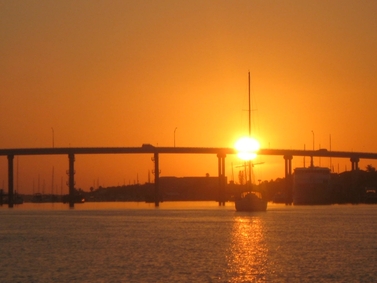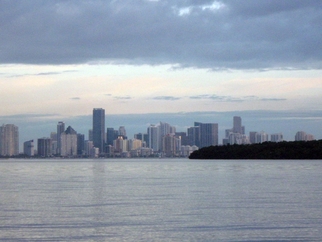
View of Miami skyline from Key Biscayne
After arriving in the Keys mid-month, we traveled the “inside” route for the first time to pass through on our way to Miami. By Martin Luther King Jr Day, we were tied up to a mooring at Dinner Key, beating Pat and Fred by only a few days. We spent the time since catching up and seeing more of south Florida. Oh yes and fixing things on the boat.
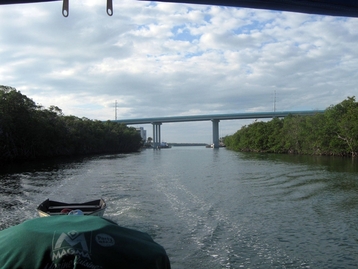
Cross Key Cut on the Keys ICW
The Back Side of the Keys
The headsail was giving us a nice boost as we made our way east from Islamorada toward Tarpon Basin off Key Largo. Wind on the beam and we were doing over 5 knots. For Jr, that was fast. We wanted to make Tarpon Basin to weather a front that was coming. Its anchorage would have protection from the northwest to northeast where the worst of the winds were supposed to come from. But right now, the winds were out of the southwest, meaning the front wasn't too far away. However, you didn't have to be a weather guru to know that a storm was on its way. The black clouds on the western horizon were making that pretty clear. Having left early, taking time only for a quick run to shore for gas, we were hoping the boost in our speed, would get us to the anchorage in Tarpon Basin before noon and before those clouds let loose. The front was supposed to have arrived this evening, but we planned to be anchored long before then.
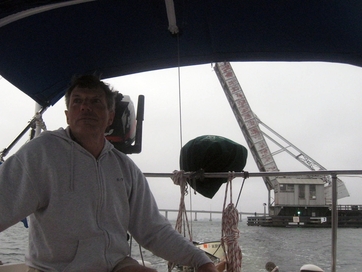
However, the clouds approaching meant that the forecast was a little off. In a few seconds everything changed. A sudden drop in the temperature and we both had the same reaction. It's here. Before we could grab the furling line, the jib backwinded, meaning it was only a matter of minutes before the rain found us. We furled the jib, and began stowing anything that could get wet. Although our course was into the wind for the moment, shortly we would be turning putting it behind us. That would be great for speed, but would mean any rain would pour into the cockpit from astern. Cathy put all but the top companionway board in, hauled out our rain gear and hoped for the best. The rain began and the wind was building. Our lovely speed was gone as we slogged into it, making less than 4 knots. Visibility was diminishing, making marks and other boats hard to find. The anticipated course change helped our speed, so much so that we regained what we lost, and we had no sails up. Dave held us on course and Cathy helped find marks and tried to keep the water from pouring into the companionway. (She couldn”t put the top board in because of the clamps that hold our chartplotter in place.) To think we had left early to avoid the storm. Sigh! Best laid plans.
But it only seemed to last forever. In reality the worst had passed in about 30 minutes. As we pulled through the cut from Buttonwood Sound into the anchorage, we realized our other worries about finding enough room to anchor were laughably misplaced. There was plenty of room and with the wind shift we would be anchoring in a direction much closer to the storm's highest winds. So, we motored through the open space, looking for sandy patches where the anchor would set well. Cathy noted spots that Dave identified with waypoints on the chartplotter. Once we had a few choices we swung around and headed for them. With the wind kicking up again, we had no need to back on the anchor. It seemed to hit the sand and set well. And as these things tend to go, the weather calmed down and stayed that way until late than evening when the front came through as forecast.
The next day, we headed to shore to explore this section of Key Largo accessible from the dinghy dock. We pulled into a dock that bordered a park outside the County office building; There was a place to get drinking water, dump trash and there were restrooms in the public building. A short walk north was a hardware store and the entrance to John Pennekamp State Park. Turning south, we found a plaza with a K-mart, Publix, a library and a place to mail letters. We decided to stay a day more to explore before heading out again.
The headsail was giving us a nice boost as we made our way east from Islamorada toward Tarpon Basin off Key Largo. Wind on the beam and we were doing over 5 knots. For Jr, that was fast. We wanted to make Tarpon Basin to weather a front that was coming. Its anchorage would have protection from the northwest to northeast where the worst of the winds were supposed to come from. But right now, the winds were out of the southwest, meaning the front wasn't too far away. However, you didn't have to be a weather guru to know that a storm was on its way. The black clouds on the western horizon were making that pretty clear. Having left early, taking time only for a quick run to shore for gas, we were hoping the boost in our speed, would get us to the anchorage in Tarpon Basin before noon and before those clouds let loose. The front was supposed to have arrived this evening, but we planned to be anchored long before then.
However, the clouds approaching meant that the forecast was a little off. In a few seconds everything changed. A sudden drop in the temperature and we both had the same reaction. It's here. Before we could grab the furling line, the jib backwinded, meaning it was only a matter of minutes before the rain found us. We furled the jib, and began stowing anything that could get wet. Although our course was into the wind for the moment, shortly we would be turning putting it behind us. That would be great for speed, but would mean any rain would pour into the cockpit from astern. Cathy put all but the top companionway board in, hauled out our rain gear and hoped for the best. The rain began and the wind was building. Our lovely speed was gone as we slogged into it, making less than 4 knots. Visibility was diminishing, making marks and other boats hard to find. The anticipated course change helped our speed, so much so that we regained what we lost, and we had no sails up. Dave held us on course and Cathy helped find marks and tried to keep the water from pouring into the companionway. (She couldn”t put the top board in because of the clamps that hold our chartplotter in place.) To think we had left early to avoid the storm. Sigh! Best laid plans.
But it only seemed to last forever. In reality the worst had passed in about 30 minutes. As we pulled through the cut from Buttonwood Sound into the anchorage, we realized our other worries about finding enough room to anchor were laughably misplaced. There was plenty of room and with the wind shift we would be anchoring in a direction much closer to the storm's highest winds. So, we motored through the open space, looking for sandy patches where the anchor would set well. Cathy noted spots that Dave identified with waypoints on the chartplotter. Once we had a few choices we swung around and headed for them. With the wind kicking up again, we had no need to back on the anchor. It seemed to hit the sand and set well. And as these things tend to go, the weather calmed down and stayed that way until late than evening when the front came through as forecast.
The next day, we headed to shore to explore this section of Key Largo accessible from the dinghy dock. We pulled into a dock that bordered a park outside the County office building; There was a place to get drinking water, dump trash and there were restrooms in the public building. A short walk north was a hardware store and the entrance to John Pennekamp State Park. Turning south, we found a plaza with a K-mart, Publix, a library and a place to mail letters. We decided to stay a day more to explore before heading out again.
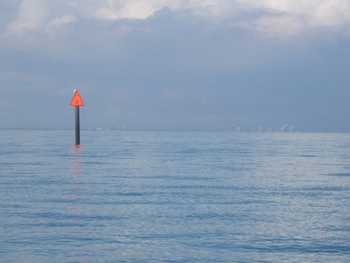
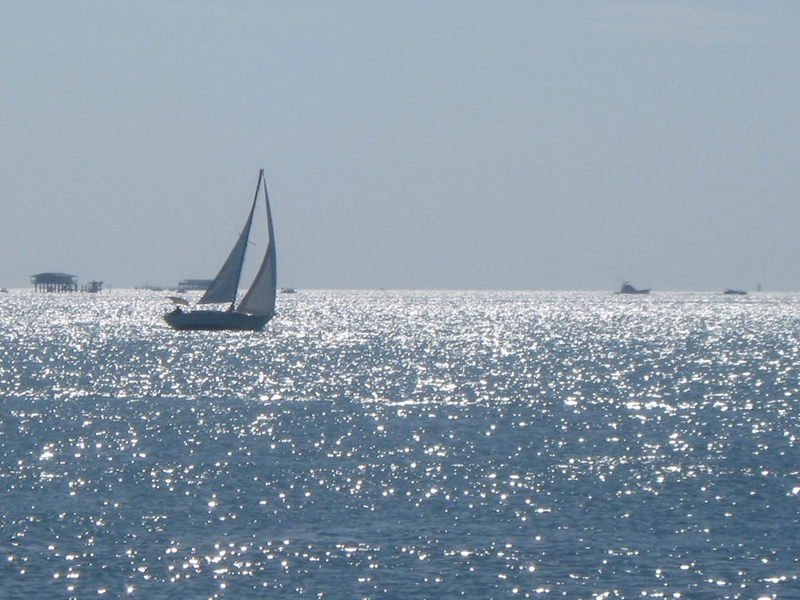
Calm waters on Biscayne Bay
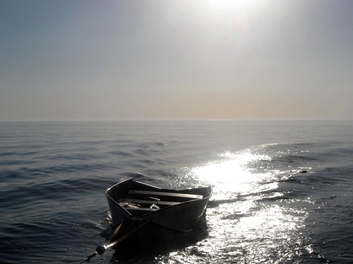
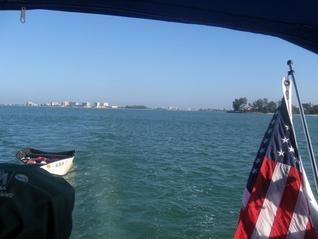
After the front, we were facing several days of north winds, which would make travel north across the large sounds and the much larger Biscayne Bay virtually impossible. After a couple of days of high winds, the forecast finally settled down on the Sunday of the holiday weekend. Since another front was likely behind these winds, we headed out at first light to make as much distance as possible in the lighter winds. As the day progressed, the winds died, making it a placid trip across the sounds. We decided we were making good enough time to try for the anchorage off Key Biscayne, sometimes referred to as Nixon Harbor (yes, that Nixon). It would be close to sunset when we arrived, and once we passed Elliot Key, we had no more bailouts. As we passed the open flats that separated Biscayne Bay from the open ocean, the number of power boats darting by us increased and the swells from the ocean started rolling in. Although it was hard to tell the difference between them and the power boat wakes. As the anchorage was coming into view, we were trying to make sense of all the boats we kept seeing near shore. There were too many. Wasn't this Sunday? Why wasn't everyone headed home? Oooooohhhhh! The holiday! As we got closer we realized that our anchorage was FULL of boats anchored everywhere. Cathy counted 12 boats in a single raft. And boats were darting in and out, towing water skiers and kids on rafts. Ugh! We had no choice though, we had to find a spot. Once again, Jr's shallow draft saved us. We headed behind the mark into the shallows that no one else wanted. We easily found a spot and anchored away from all the excitement., but not the wakes. As the sun set they gradually diminished. By morning, we were virtually alone in the anchorage.
But with Miami's skyline hovering in the distance, we enjoyed the view and knew we had a very short day to Dinner Key tomorrow. By noon, we were on our mooring, ready to stay put for a while after traveling almost every day for 2 weeks.
But with Miami's skyline hovering in the distance, we enjoyed the view and knew we had a very short day to Dinner Key tomorrow. By noon, we were on our mooring, ready to stay put for a while after traveling almost every day for 2 weeks.
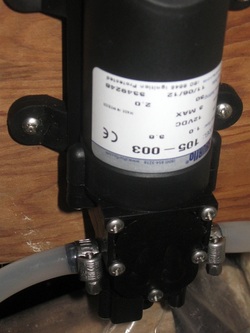
Orion Jr's new fresh water pump
Boat Stuff
“What's that noise? “
Those three words can be the start of some of the biggest projects on any boat. In our case, it was the bilge pump. And it was running. And running. And running. We first discovered it when we arrived at Fort Myers Beach. When the noise of the engine was gone, Cathy heard the pump running. After hauling everything out under the companionway stairs, we discovered the bilge was essentially dry, but the float switch must have been triggered by water sloshing in the bilge from all the wakes en route. When Cathy lifted the switch up and dropped it down the pump stopped. The switch must be faulty. This was something to watch. However, the next time we discovered it running was after a day away at Tarpon Basin. Given the amps we were down, it must have been running a long time. We had purchased the replacement float switch at Key Largo. As we pulled into Dinner Key, we decided it was time to replace it and the bilge pump. Since it had been running dry a lot, it was suspect.
Cathy wedged herself into the opening and managed to remove the old switch from the board in the bottom of the bilge where it was mounted. Dave wired the new one into line and the new bilge pump. Then we just needed to mount the new float switch on the board. Since Cathy could only get one arm into the bilge, this became the longest part of the job. After repeated failed attempts, Dave tried. Although he was also unsuccessful, he made some suggestions that did the trick. Cathy got the switch in place and it worked great.
But there was one more thing.
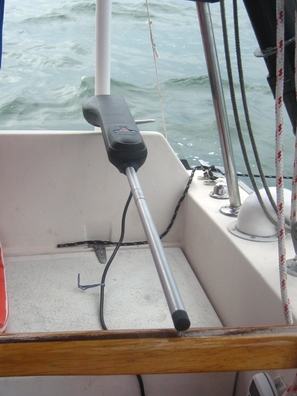
We discovered where the water in the bilge was coming from. Our freshwater pump was leaking. This was disturbing for a number of reasons. We had just replaced the faucet part of the original kit, which had failed in November. But now the pump half needed replacing and it was out of warranty. Also, if the leak had deteriorated while we were in the Everglades, we could have run completely out of fresh water. We needed a better solution. Dave called Shurflo to talk about the problem, and was impressed by their customer service. They offered to replace the pump with a better one at no charge. Within a couple of days of the conversation, we had the new pump in hand. Since the new pump didn't need to be installed below the water tank, we decided to use the space right next to the tank to plumb in a water filter before the pump. We then moved the pump to a location under the sink. And since the new pump maintains its own pressure, if the sink switch fails, it won't need to be replaced. Since all its doing at this point is opening the flow of water.
And there's no more fresh water being pumped overboard from the bilge.
“What's that noise? “
Those three words can be the start of some of the biggest projects on any boat. In our case, it was the bilge pump. And it was running. And running. And running. We first discovered it when we arrived at Fort Myers Beach. When the noise of the engine was gone, Cathy heard the pump running. After hauling everything out under the companionway stairs, we discovered the bilge was essentially dry, but the float switch must have been triggered by water sloshing in the bilge from all the wakes en route. When Cathy lifted the switch up and dropped it down the pump stopped. The switch must be faulty. This was something to watch. However, the next time we discovered it running was after a day away at Tarpon Basin. Given the amps we were down, it must have been running a long time. We had purchased the replacement float switch at Key Largo. As we pulled into Dinner Key, we decided it was time to replace it and the bilge pump. Since it had been running dry a lot, it was suspect.
Cathy wedged herself into the opening and managed to remove the old switch from the board in the bottom of the bilge where it was mounted. Dave wired the new one into line and the new bilge pump. Then we just needed to mount the new float switch on the board. Since Cathy could only get one arm into the bilge, this became the longest part of the job. After repeated failed attempts, Dave tried. Although he was also unsuccessful, he made some suggestions that did the trick. Cathy got the switch in place and it worked great.
But there was one more thing.
We discovered where the water in the bilge was coming from. Our freshwater pump was leaking. This was disturbing for a number of reasons. We had just replaced the faucet part of the original kit, which had failed in November. But now the pump half needed replacing and it was out of warranty. Also, if the leak had deteriorated while we were in the Everglades, we could have run completely out of fresh water. We needed a better solution. Dave called Shurflo to talk about the problem, and was impressed by their customer service. They offered to replace the pump with a better one at no charge. Within a couple of days of the conversation, we had the new pump in hand. Since the new pump didn't need to be installed below the water tank, we decided to use the space right next to the tank to plumb in a water filter before the pump. We then moved the pump to a location under the sink. And since the new pump maintains its own pressure, if the sink switch fails, it won't need to be replaced. Since all its doing at this point is opening the flow of water.
And there's no more fresh water being pumped overboard from the bilge.
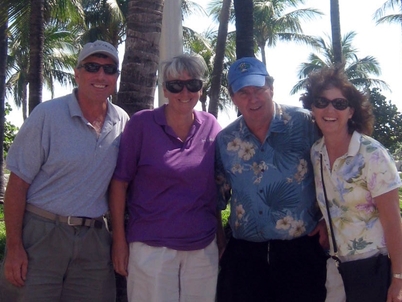
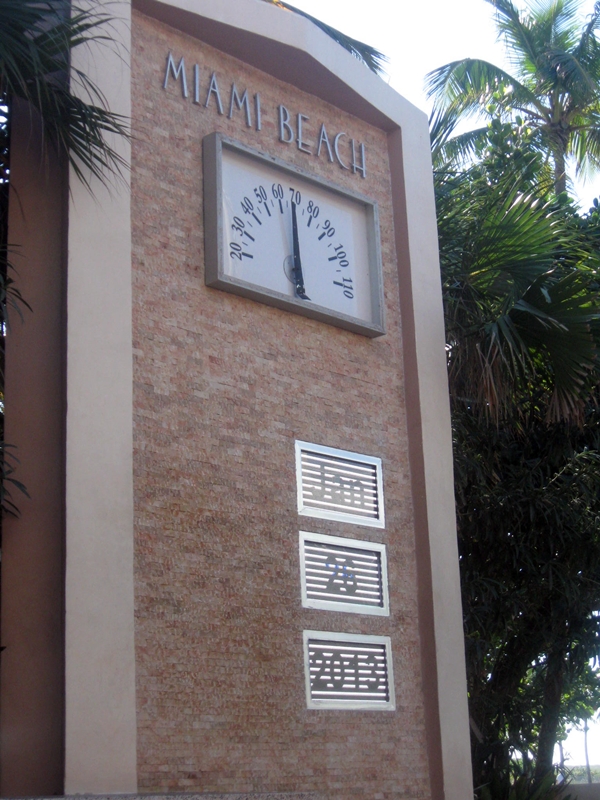
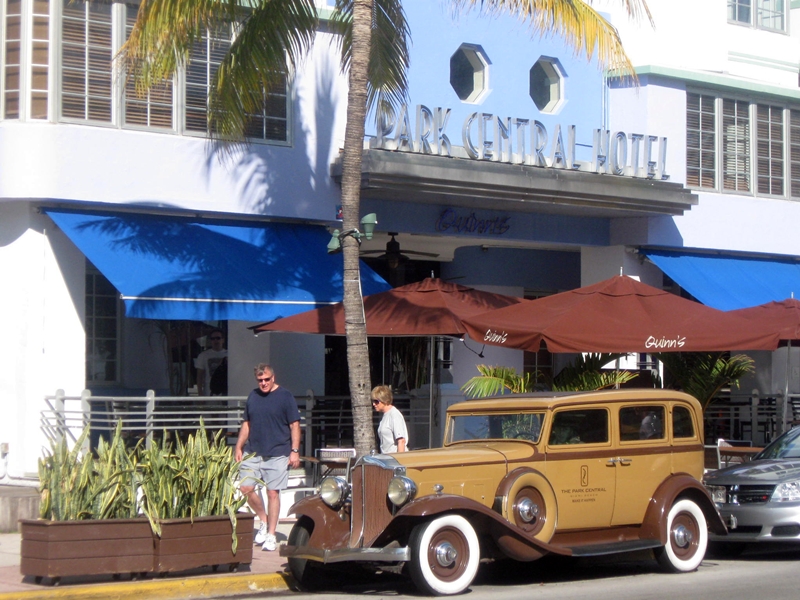
Re-united with Pat and Fred as we walk through South Beach
Together Again
We had been monitoring Marianna's progress as she made her way south. Pat and Fred had been traveling almost every day without stopping for 2 weeks. Their efforts were paying off. By Thursday, the 24th, they were underway toward Miami, right on schedule or maybe even a day early. We talked to them throughout the day and headed out to meet them as they turned down the Dinner Key channel. As they tied up to their nearby mooring, we came aboard with hugs all around, having last seen them in person over a year earlier.
We had been monitoring Marianna's progress as she made her way south. Pat and Fred had been traveling almost every day without stopping for 2 weeks. Their efforts were paying off. By Thursday, the 24th, they were underway toward Miami, right on schedule or maybe even a day early. We talked to them throughout the day and headed out to meet them as they turned down the Dinner Key channel. As they tied up to their nearby mooring, we came aboard with hugs all around, having last seen them in person over a year earlier.
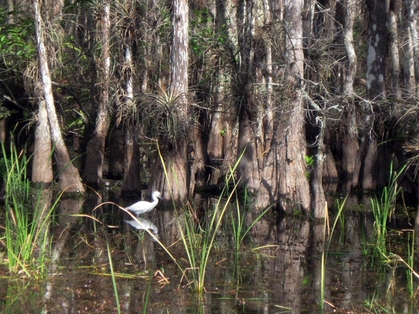
Big Cypress National Preserve
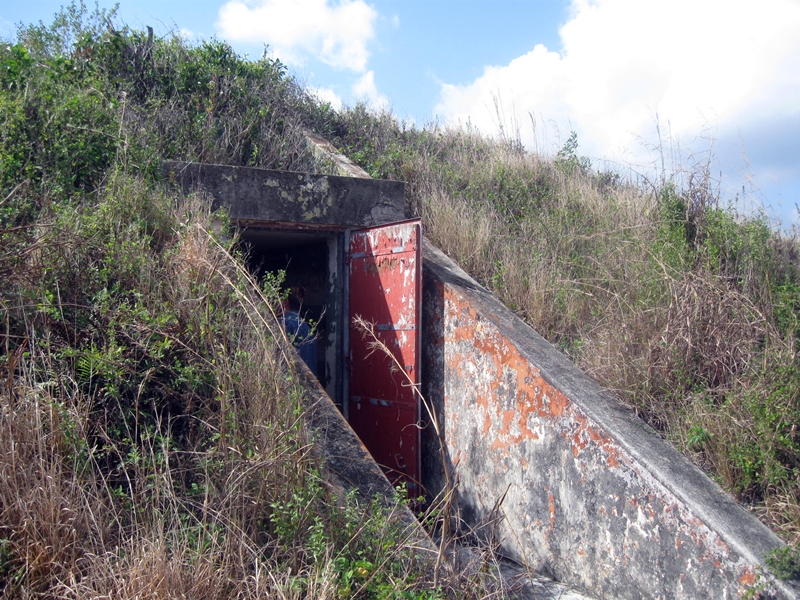
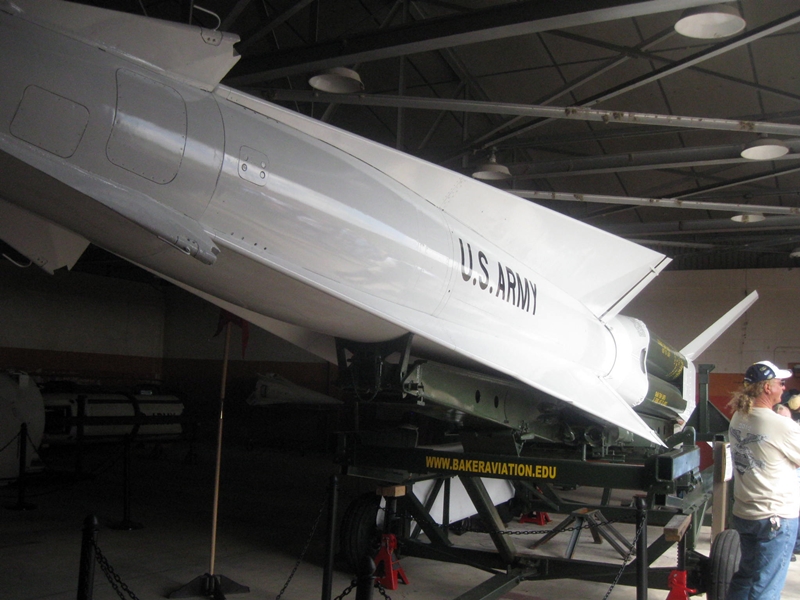
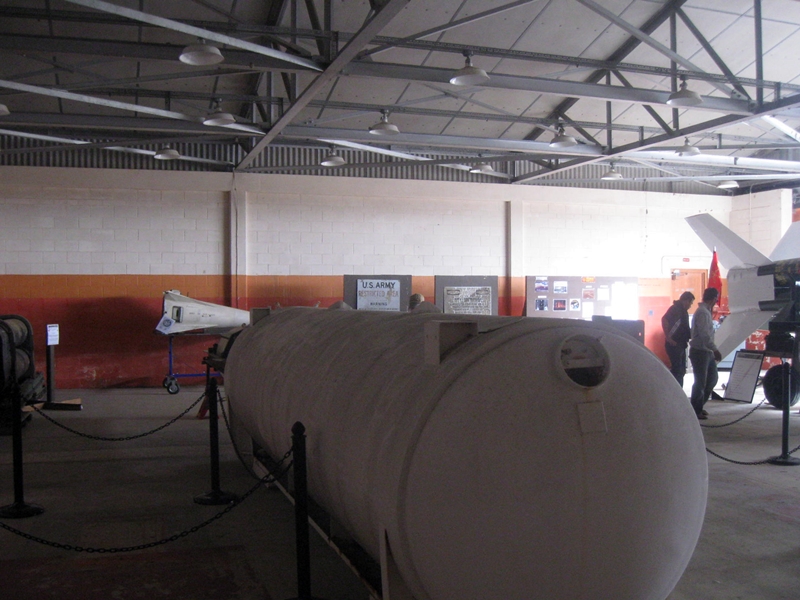
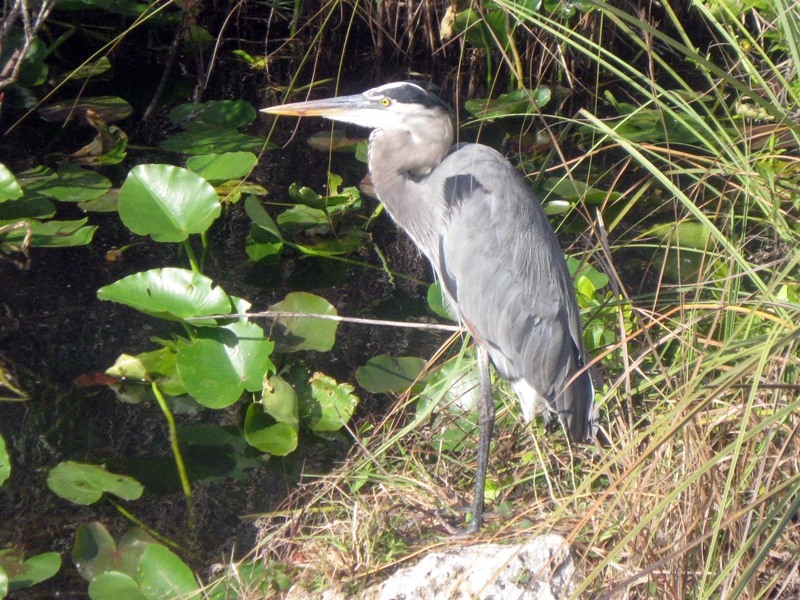
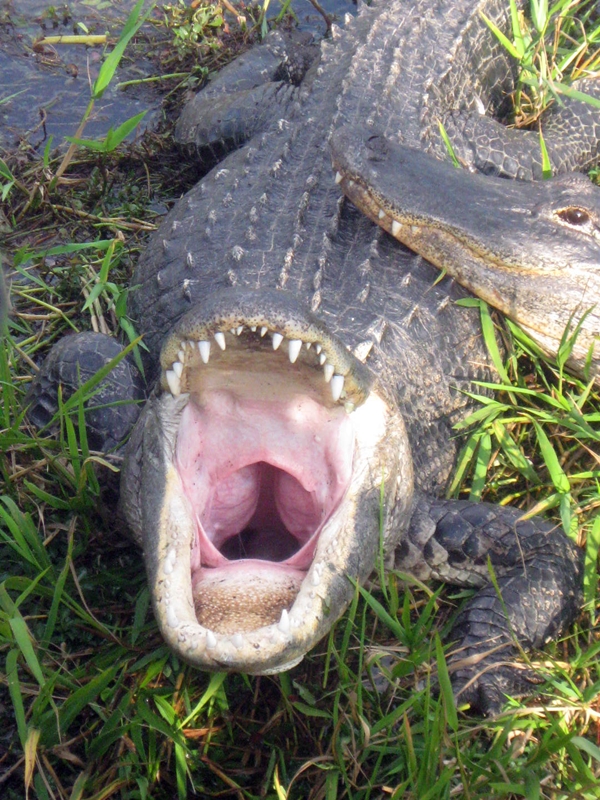
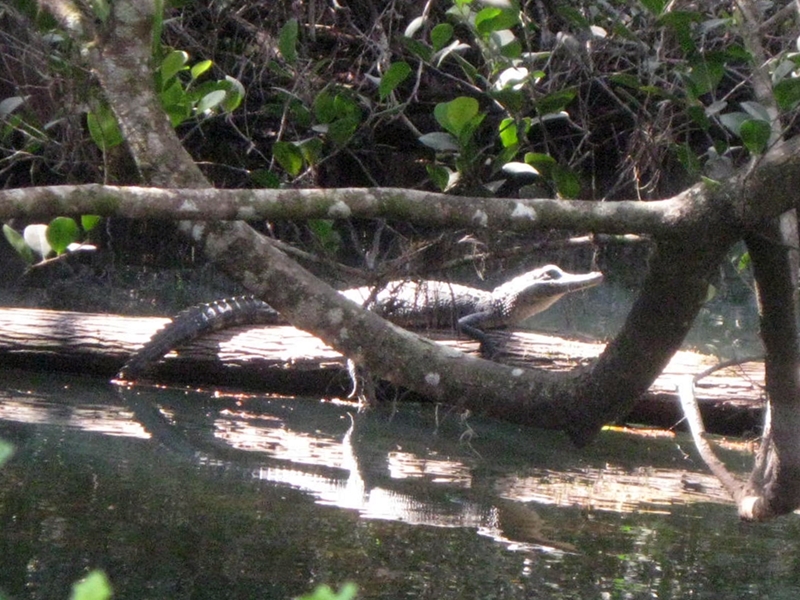
Over the next week as January came to a close, we helped with boat projects and got together to sightsee, renting a car to travel to South Beach to meet their daughter Jen and her friend, and to the Everglades. Cape Florida and Big Cypress National Wildlife Area. It's been a great time so far, and we plan to enjoy more time here and in the Keys.
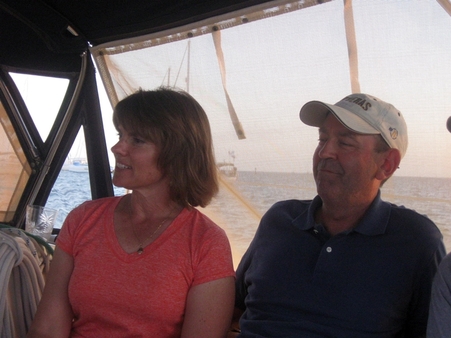
Debbie and Fred from Early Out
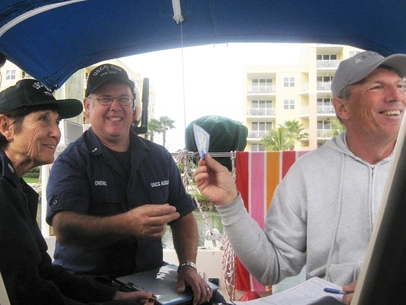
Shortly after Marianna arrived, we were joined by Fred and Debbie on Early Out. The three of us were last together on Cat Island in the Bahamas. We got together a couple of times before Early Out was again under way to the Bahamas. They joined us on Marianna to celebrate Dave's birthday the night before they headed out. We've also re-connected with other friends here. Larry and Lynn on Two Morrows were already here when we arrived, as Lynn is recovering from a severe illness that had her in the hospital for 3 weeks. Mike and Sue from Indecision have made this their destination for the winter. They hailed us shortly after they arrived and we caught up as they came aboard and checked out the changes in Orion Jr. Who knows who we'll see next?